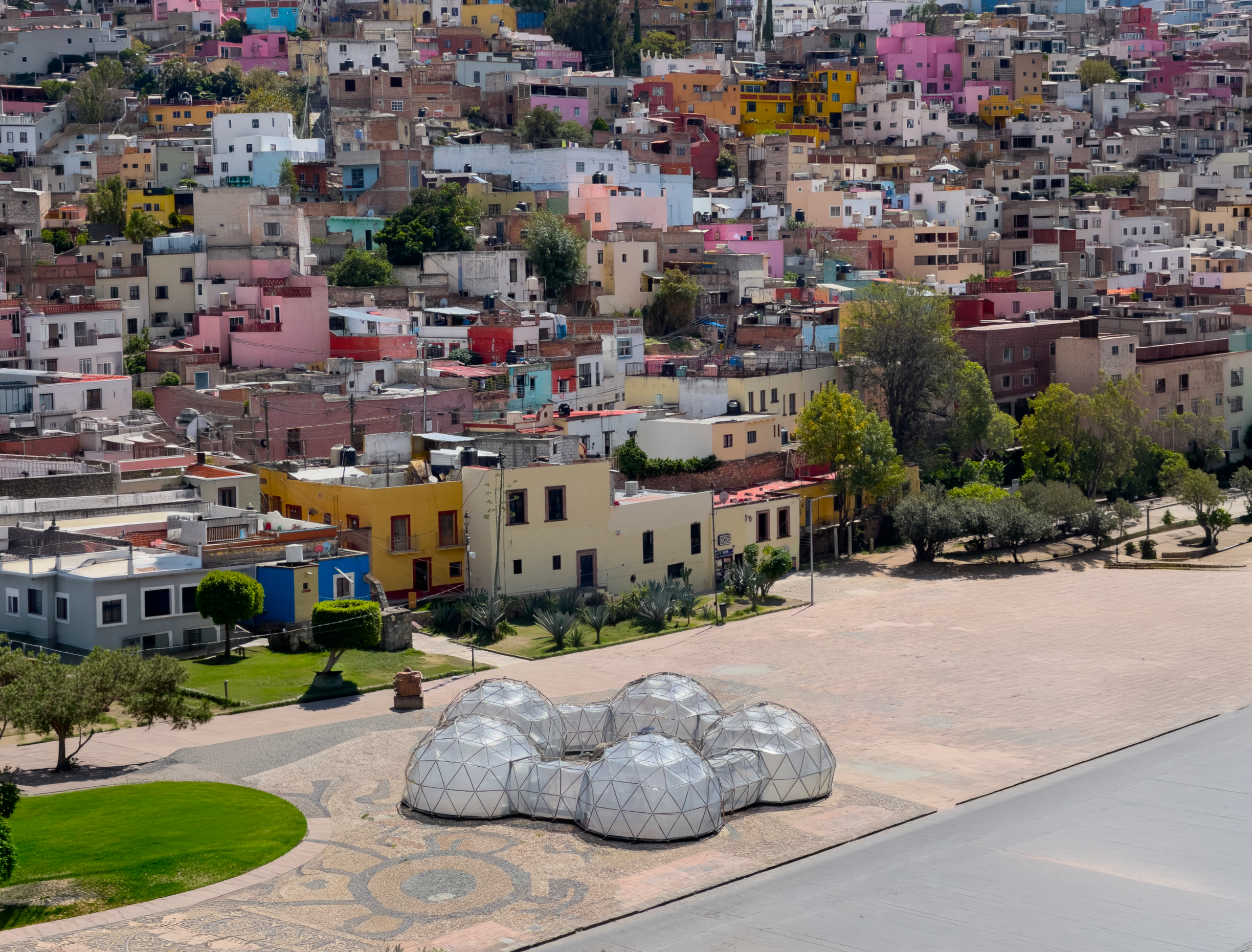
Touring the Pollution Pods
The Pollution Pods have been touring internationally since 2017 and are supported by a dedicated team of four technicians. When demounted, the complete installation is packed into nine purpose-built crates, designed to fit within a single 20-foot shipping container, facilitating international transport and installation. Each dome is 6 metres in diameter and 3 metres high and can accommodate up to 50 visitors at any one time. The modular construction allows the installation to be adapted to different exhibition sites and configurations, subject to available floor area, access and technical requirements.
Tautra, Norway
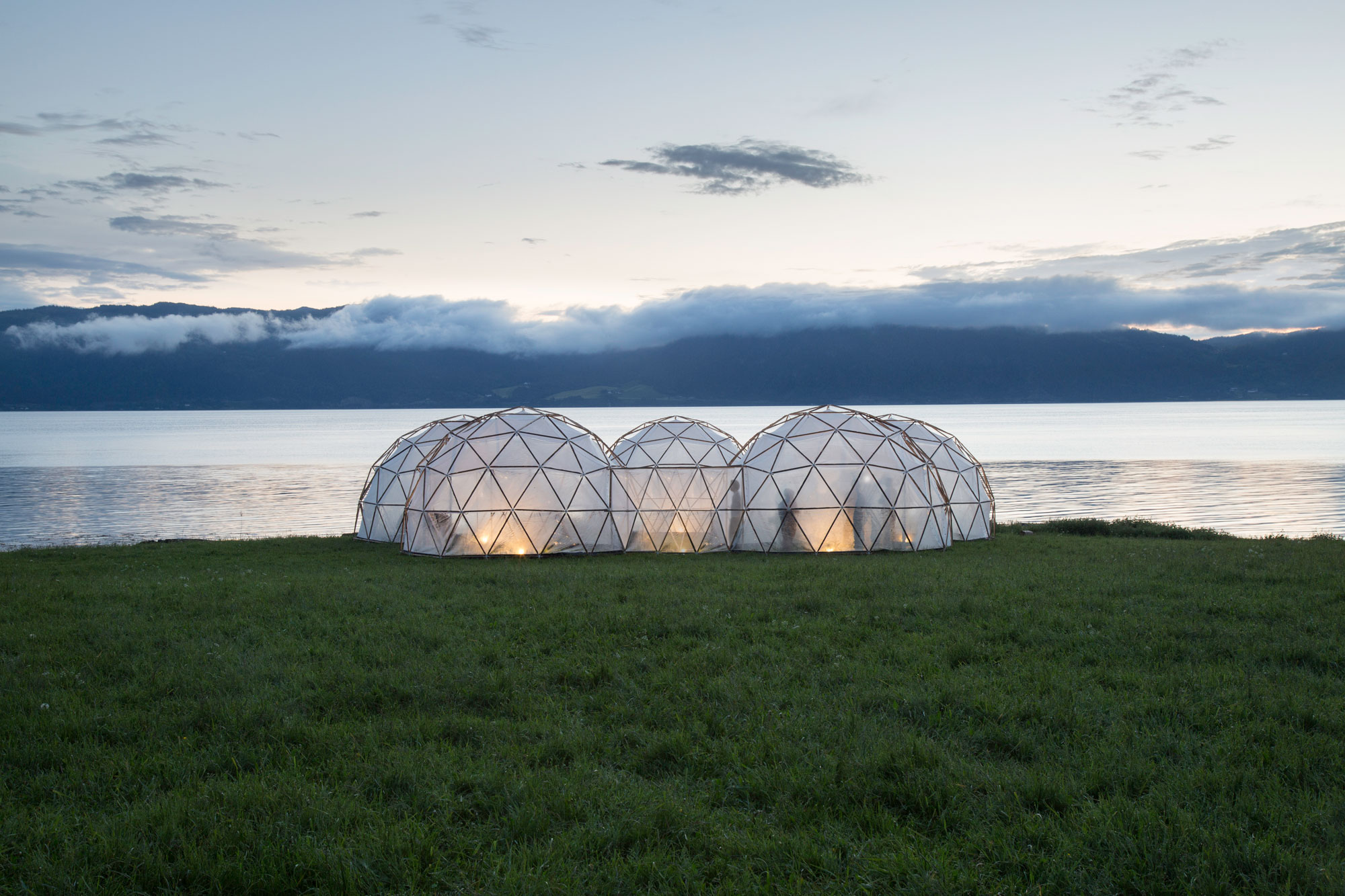
The Pollution Pods installation was first erected as a pilot project on Tautra, a remote peninsula in Norway. Under the supervision of the founders of Build with Hubs a dedicated team of volunteers from the Norwegian University of Science and Technology (NTNU) assembled the installation. The team began setting up the geodesic structure early in the morning on 17 June 2017 and completed it by 2:00 AM on 18 June 2017, which is exactly when the project’s cover photograph was captured. You can watch film of the buildling process to see how the domes came together.
Trondheim, Norway
Following its completion on Tautra, the artwork made its public debut in Trondheim as a major feature of the Starmus Festival. Sited in the city’s Festning Park, the installation coincided with the fourth edition of this international science and arts gathering hosted by the Norwegian University of Science and Technology (NTNU). The installation served as the public launch for Climart, a four-year psychological research project. The festival brought together legendary scientists, artists, and astronauts including Stephen Hawking, Buzz Aldrin, and Brian Eno.
Somerset House, London, UK
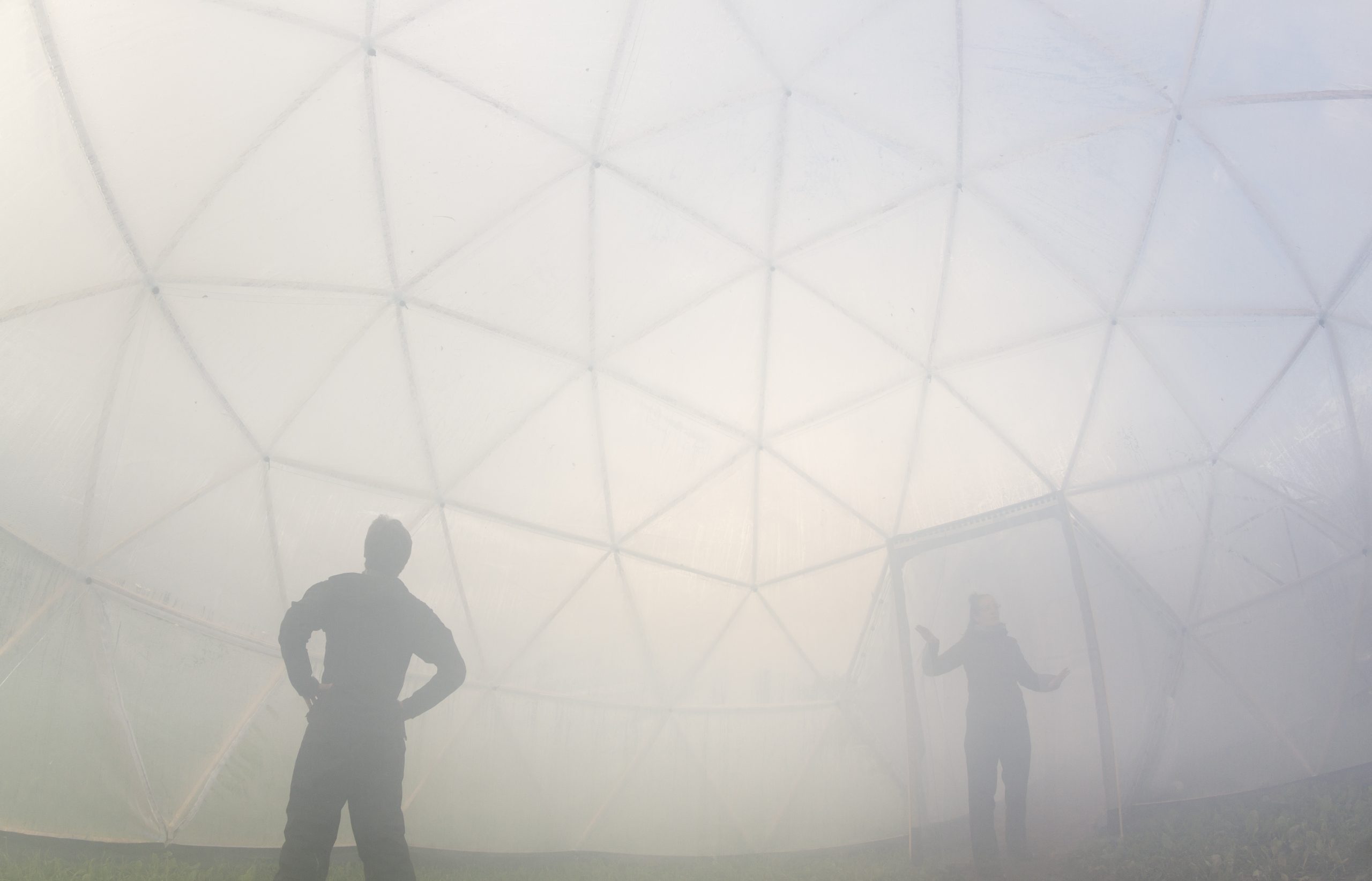
In April 2018, the artwork made its UK debut at Somerset House in London, serving as the centerpiece for the landmark cultural hub’s annual Earth Day celebrations. Erected in the middle of the iconic Edmond J. Safra Fountain Court, the location provided a stark, historical context. The neo-classical complex was completed around the dawn of the Industrial Revolution, the very era that marked the beginning of mass global resource exploitation and systemic environmental damage. Staging the artwork inside one of London’s busiest, most traffic-heavy corridors created a powerful spatial irony, confronting urban visitors with a direct comparison between local city emissions and broader global environmental realities
Place de Nations, Geneva, Switzerland
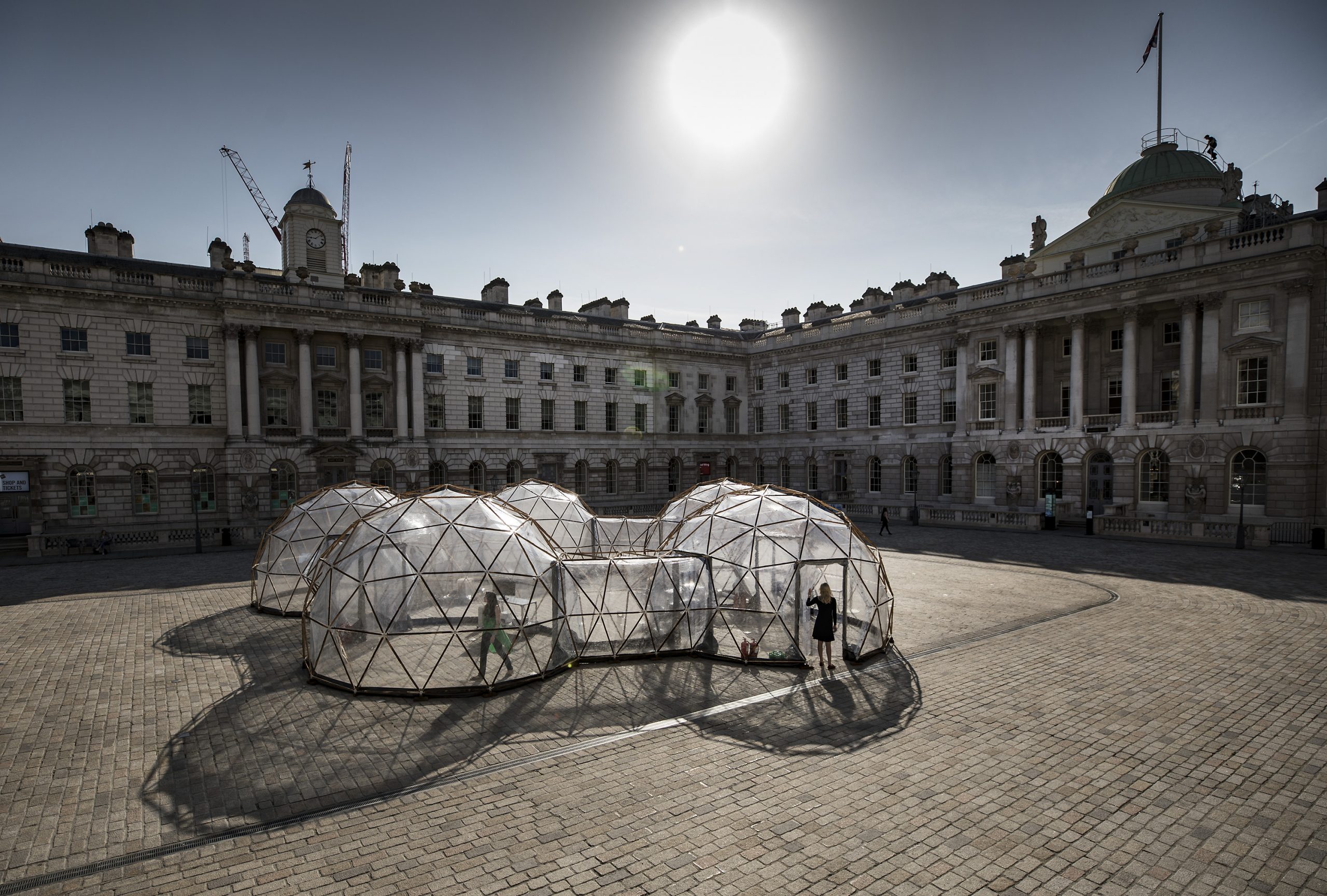
When the Pollution Pods were shown at the World Health Organisation’s inaugural Global Conference on Air Pollution and Health in Geneva, it was used as a practical illustration for the ongoing political and scientific discussions. Placed at the Place des Nations, the installation allowed attending international delegates, health officials, and environmental ministers to experience simulated variations in global air quality firsthand. As reflected in the commentary at the event, WHO Director-General Dr Tedros Adhanom Ghebreyesus noted that having the physical installation on-site helped keep the issue at the forefront of the programme’s agenda. Organisers utilised the presence of the exhibit to advocate for stricter adherence to global air quality guidelines and to prompt further policy commitments from the participating nations.
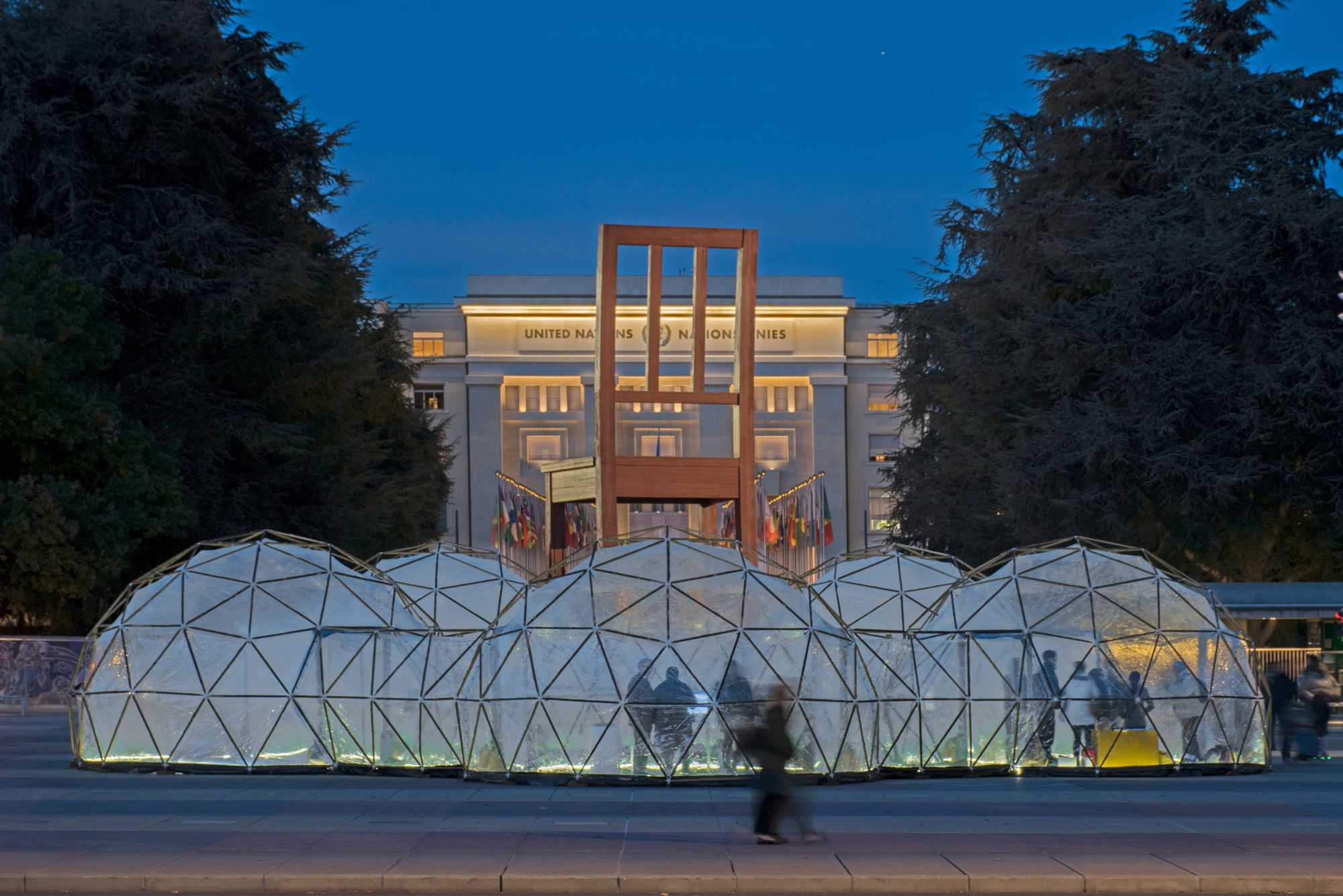
Klimahaus, BremerHaven, Germany
Michael Pinsky’s installation was hosted outside the Klimahaus, a science centre and museum dedicated to climate change. Exhibited for a month between November and December 2018,, the exhibition provided a practical extension to the museum’s educational programming. By embedding the installation alongside a dedicated climate museum, organisers and researchers utilised the exhibit to gather empirical data on whether a physical, sensory encounter with simulated global air quality could prompt visitors to alter their daily environmental perspectives.
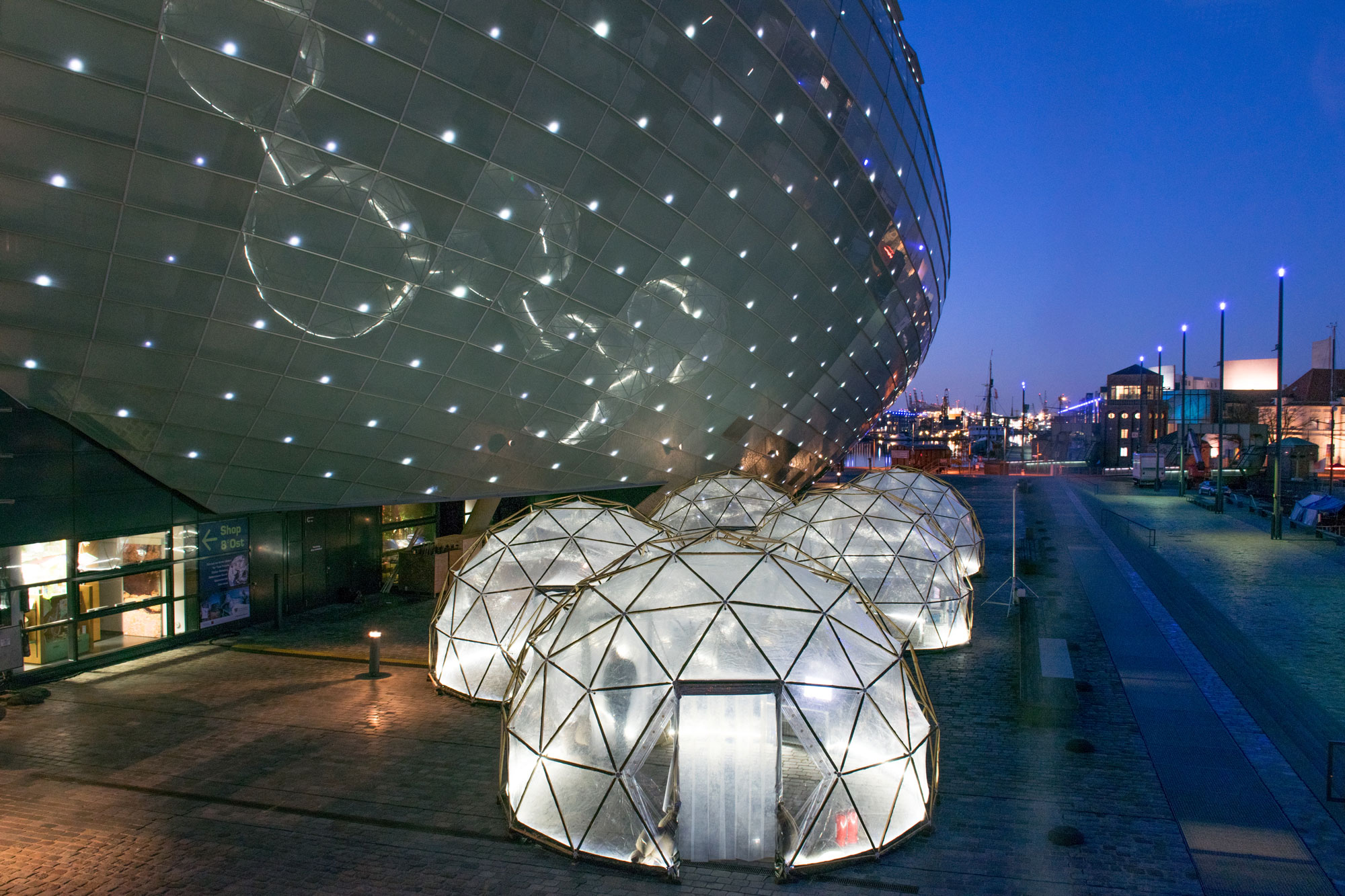
TED, Vancouver, Canada
The Pollution Pods were featured at TED2019: Bigger Than Us, the flagship annual TED conference. Erected within the Vancouver Convention Centre, the exhibit acted as a physical extension of the conference’s focus on global challenges and scalable solutions. Conference attendees transitioned through the linked chambers, experiencing the installation as a sensory “tasting menu” of global air quality. Upon exiting the final dome, participants were presented with a secondary menu outlining six actionable lifestyle changes, such as adopting a plant-based diet, reducing clothing consumption, and transitioning to electric vehicles, designed to bridge the physical experience of the installation with individual climate advocacy.
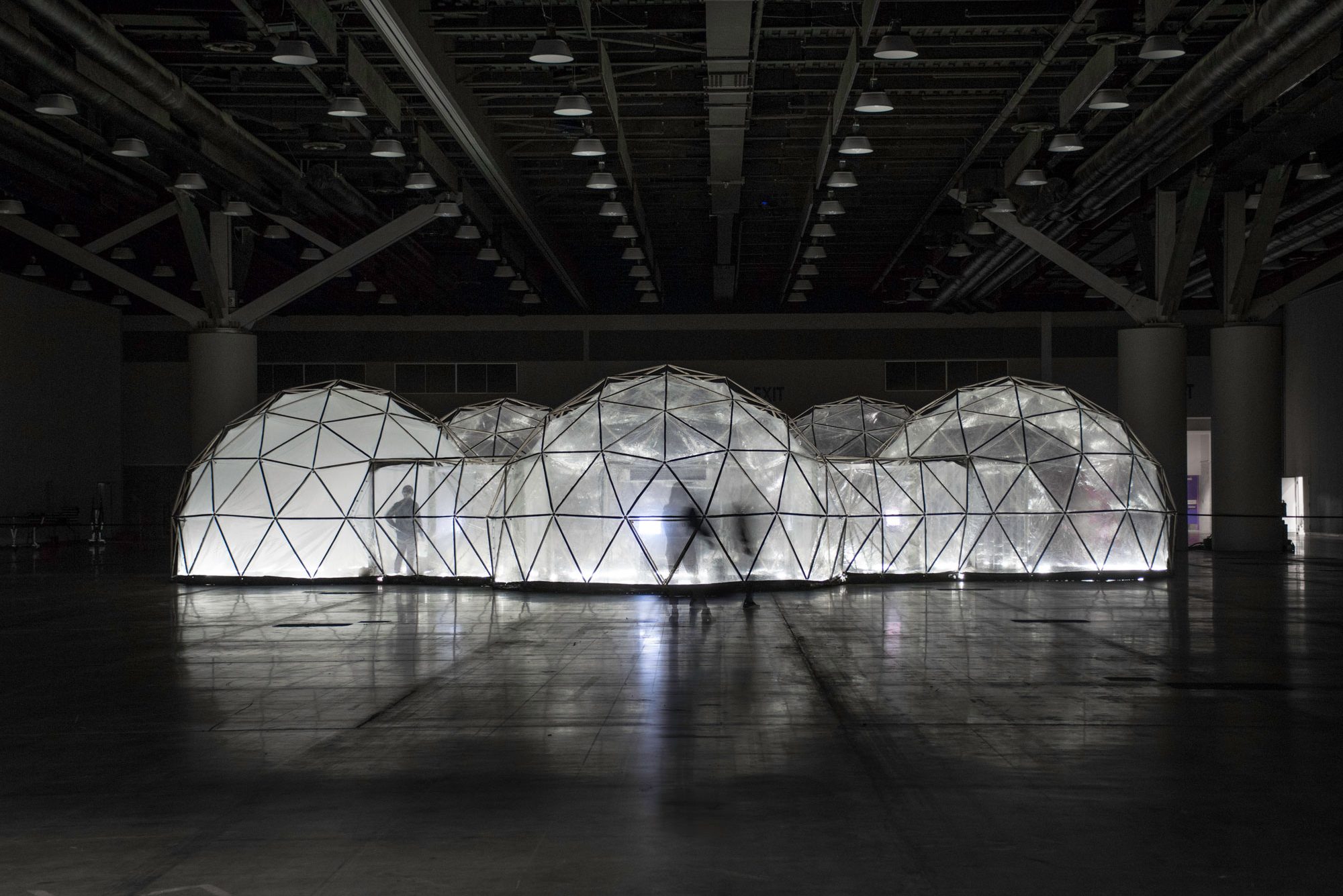
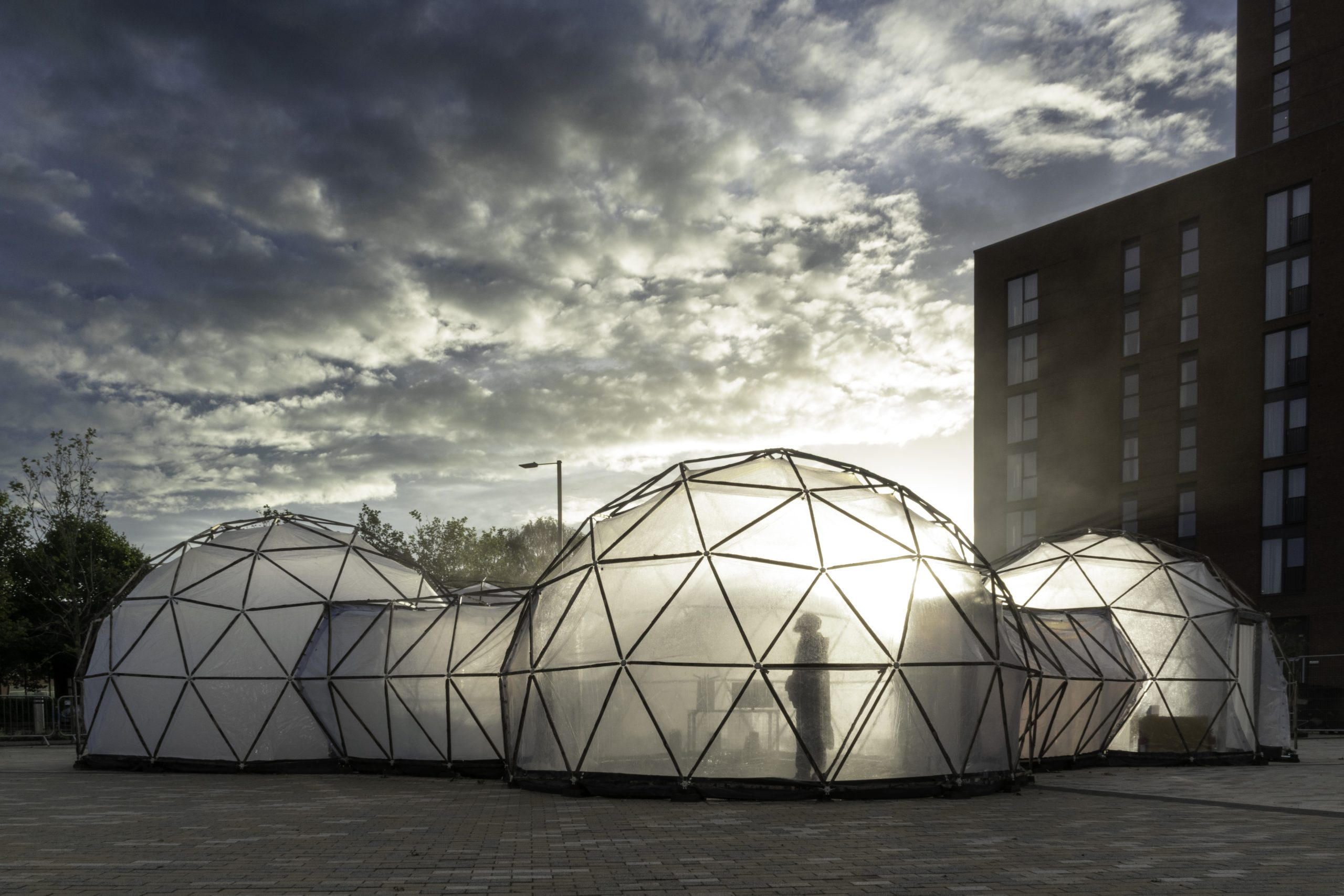
Media City Plaza, Salford, UK
In June 2019, the Pollution Pods were brought to MediaCity, acting as the headline exhibition for the region’s first-ever Clean Air Week. Formally partnered with Transport for Greater Manchester, the public display on the Piazza coincided with national Clean Air Day and was used to gather public feedback on the city region’s emerging Clean Air Plan. Local politicians, including Mayor of Greater Manchester Andy Burnham, utilised the exhibition to publicise the area’s ongoing air quality challenges, framing the localised urban simulated environments as a tangible example of the risks confronting communities in the North West. Additionally, the MRC Centre for Environment and Health integrated the exhibition into the MRC Festival of Science, hosting educational workshops alongside the display to inform local residents about the specific health impacts of commuter and industrial emissions.
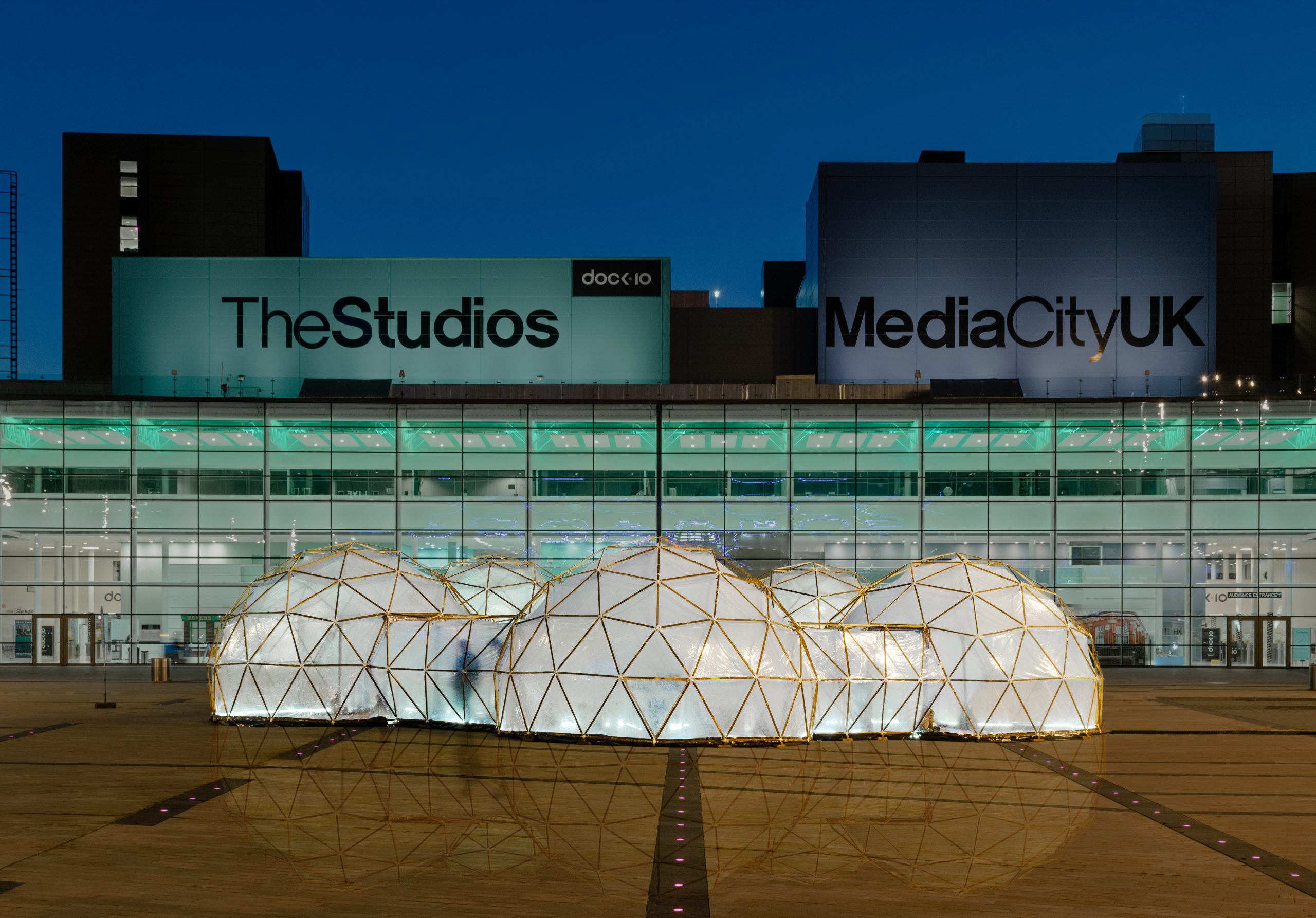
B-Side, Portland, UK
In the summer of 2019, the Pollution Pods were presented on the Isle of Portland in association with the b-side Arts Festival. Sited at the Stadium Bowl the exhibition was supported by the local prison facility, HMP & YOI Portland, which provided land assistance for the installation. Co-presented by Cape Farewell, the display of the Pollution Pods was paired with localised climate education workshops and a dedicated panel discussion titled Making Art in Times of Crisis.
Science Gallery, Melbourne, Australia
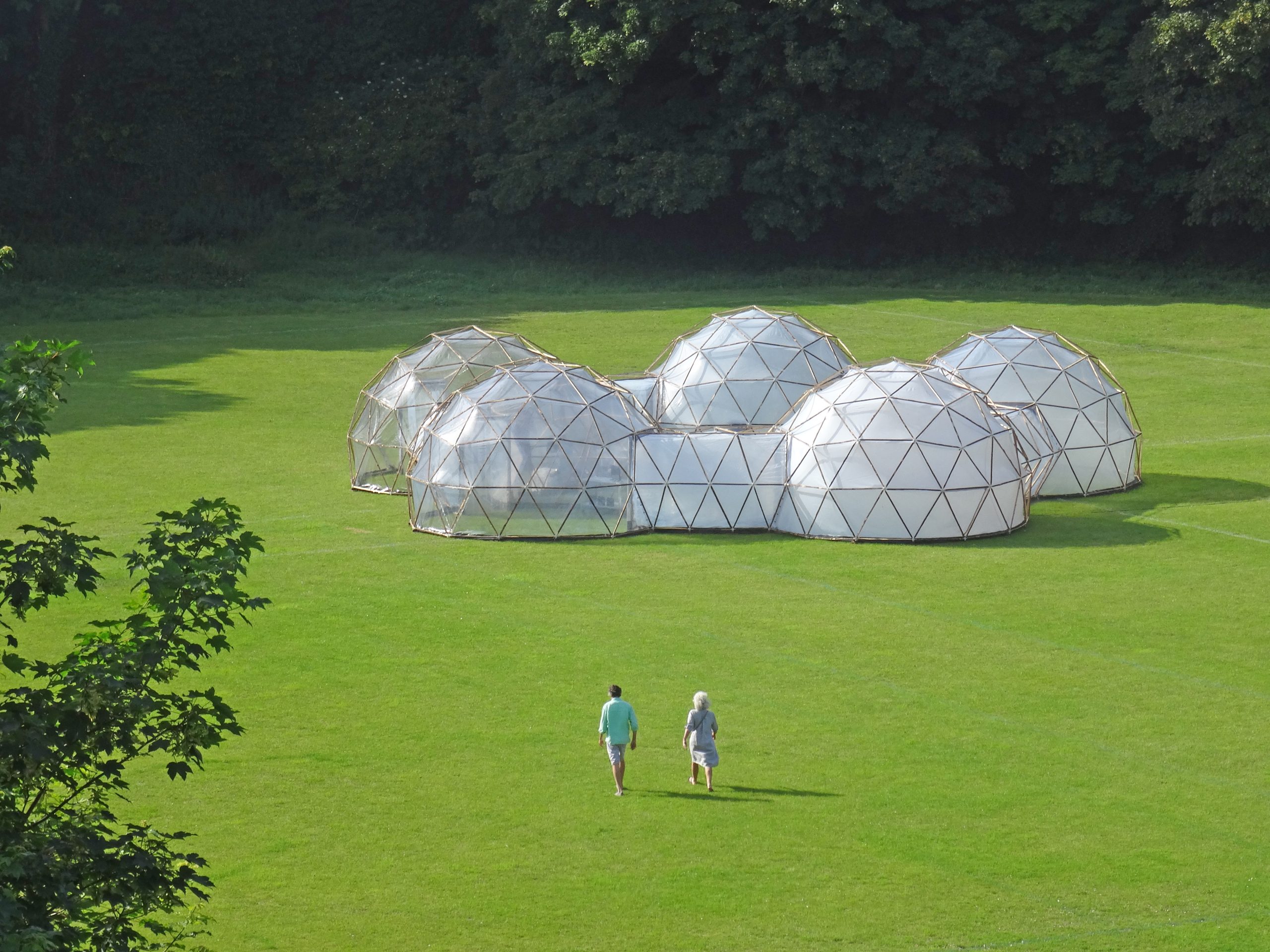
In August 2019, the Pollution Pods made their Australian debut in Melbourne, presented by Science Gallery Melbourne as a major highlight of their DISPOSABLE exhibition. Sited at the Treasury Gardens in partnership with the city’s annual White Night festival, the installation was used to explore the direct link between global consumerism and localised environmental degradation. By integrating the Pollution Pods into a broader science gallery framework alongside projects examining waste management and circular economies, organisers aimed to translate abstract atmospheric data into a shared sensory experience that prompted visitors to reconsider their own consumption habits.
Activate, Brownsea Island, UK
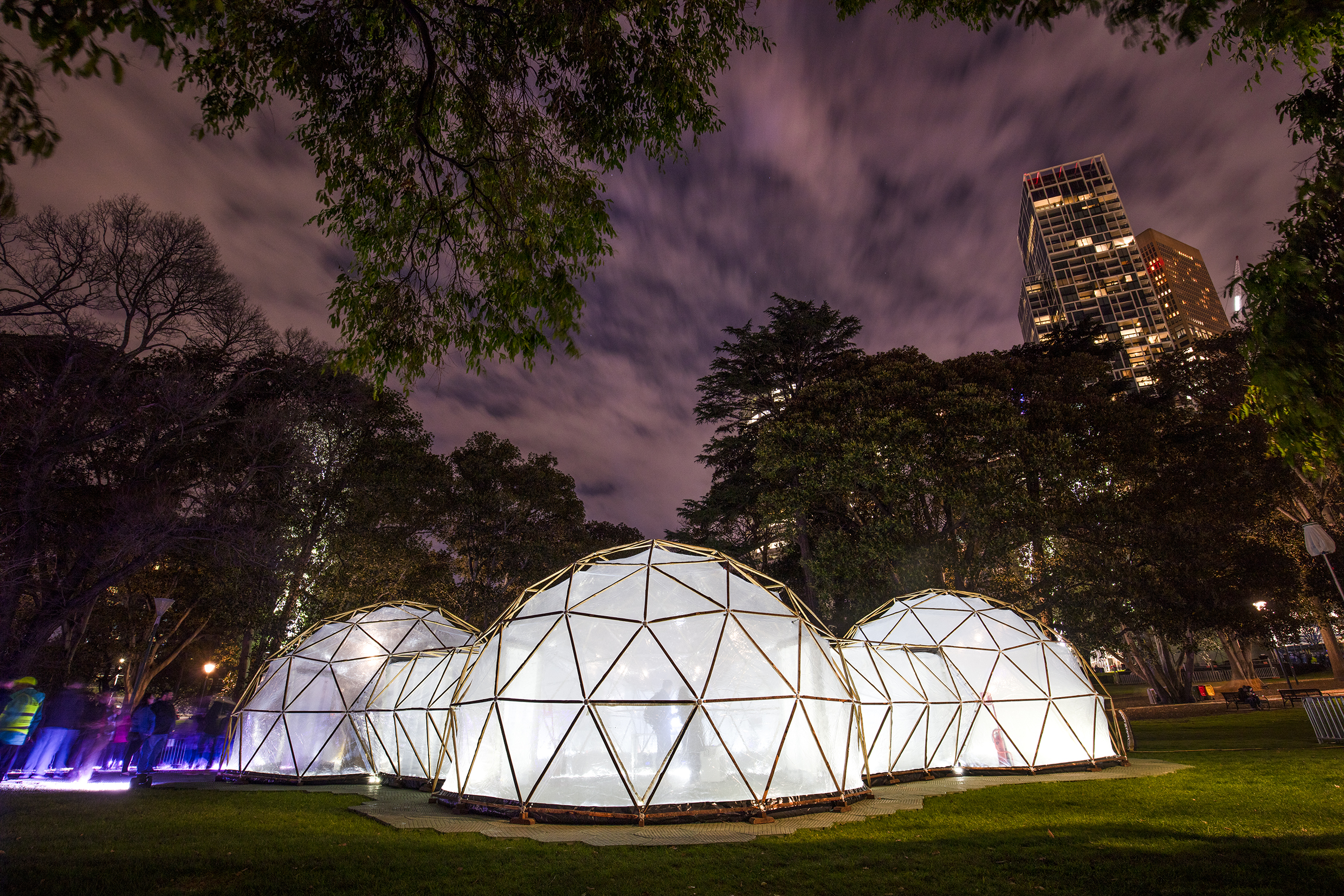
In October 2019, the Pollution Pods were installed on Brownsea Island, drawing thousands of visitors to the natural haven off the coast of Poole. The exhibition was brought to the island through a collaboration between Activate Performing Arts and Cape Farewell, with hosting provided by the National Trust. Siting the Pollution Pods within a location celebrated for its natural biodiversity and clean air allowed organisers to contrast the island’s pristine ecosystem with the simulated global toxic environments. Supported by Arts University Bournemouth, the display was also used as an active educational laboratory; undergraduate students from across the university visited the island to undertake creative fieldwork and scientific testing inspired by the environmental data embedded in the installation.
United Nations HQ, New York, USA
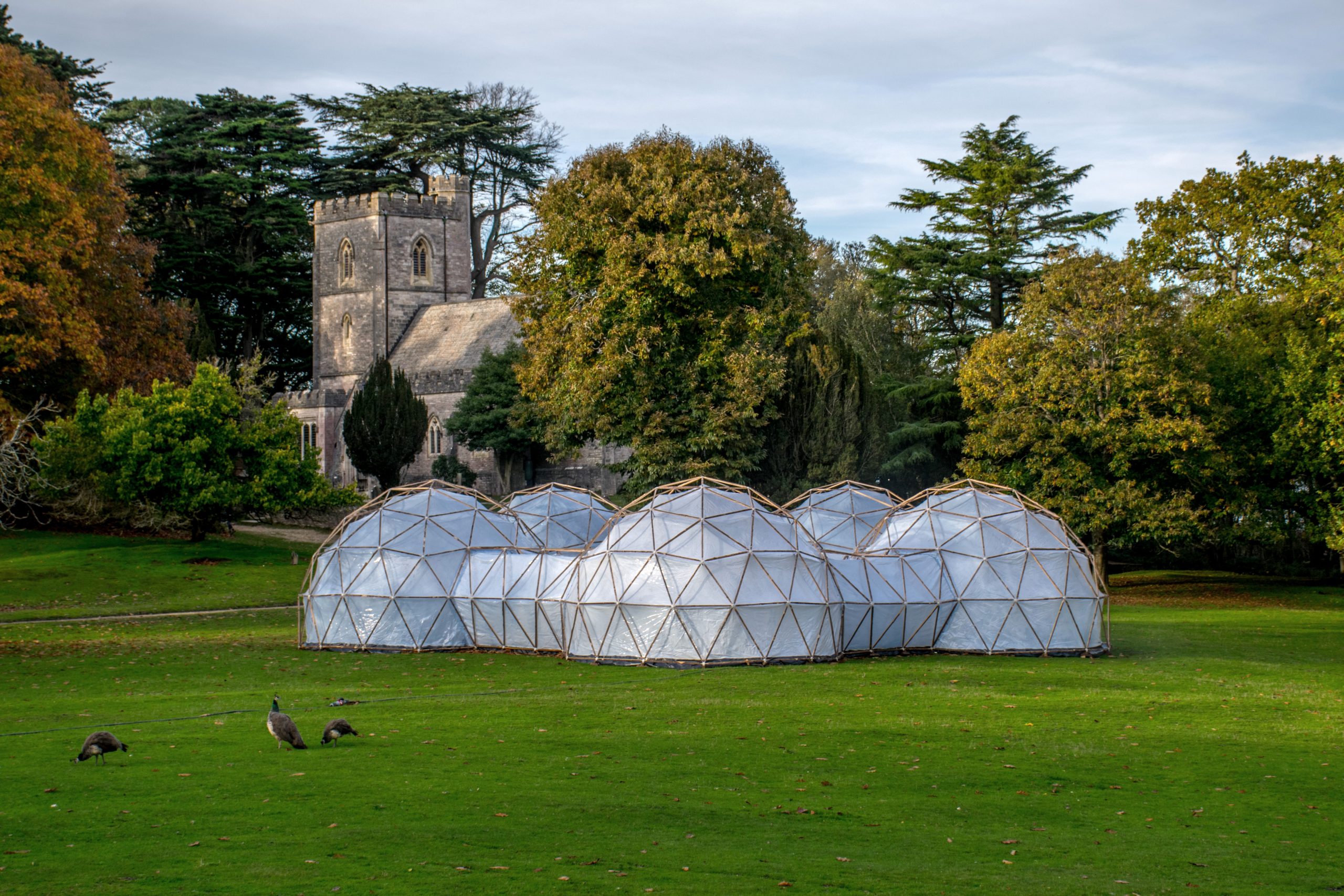
In September 2019, the Pollution Pods were installed on the North Lawn of the United Nations Headquarters, serving as a core feature of the 74th UN General Assembly. Brought to the legislative site in partnership with the World Health Organisation, the display coincided with the high-profile UN Climate Action Summit. International leaders, diplomats, and prominent activists, including Swedish environmentalist Greta Thunberg, entered the exhibition, with observers noting the visceral sense of discomfort generated by the various microclimates. Organisers and climate coalitions used the intense physical setting to advocate for the global Clean Air Initiative, directly calling on member states to commit to legally binding air quality policies by 2030.
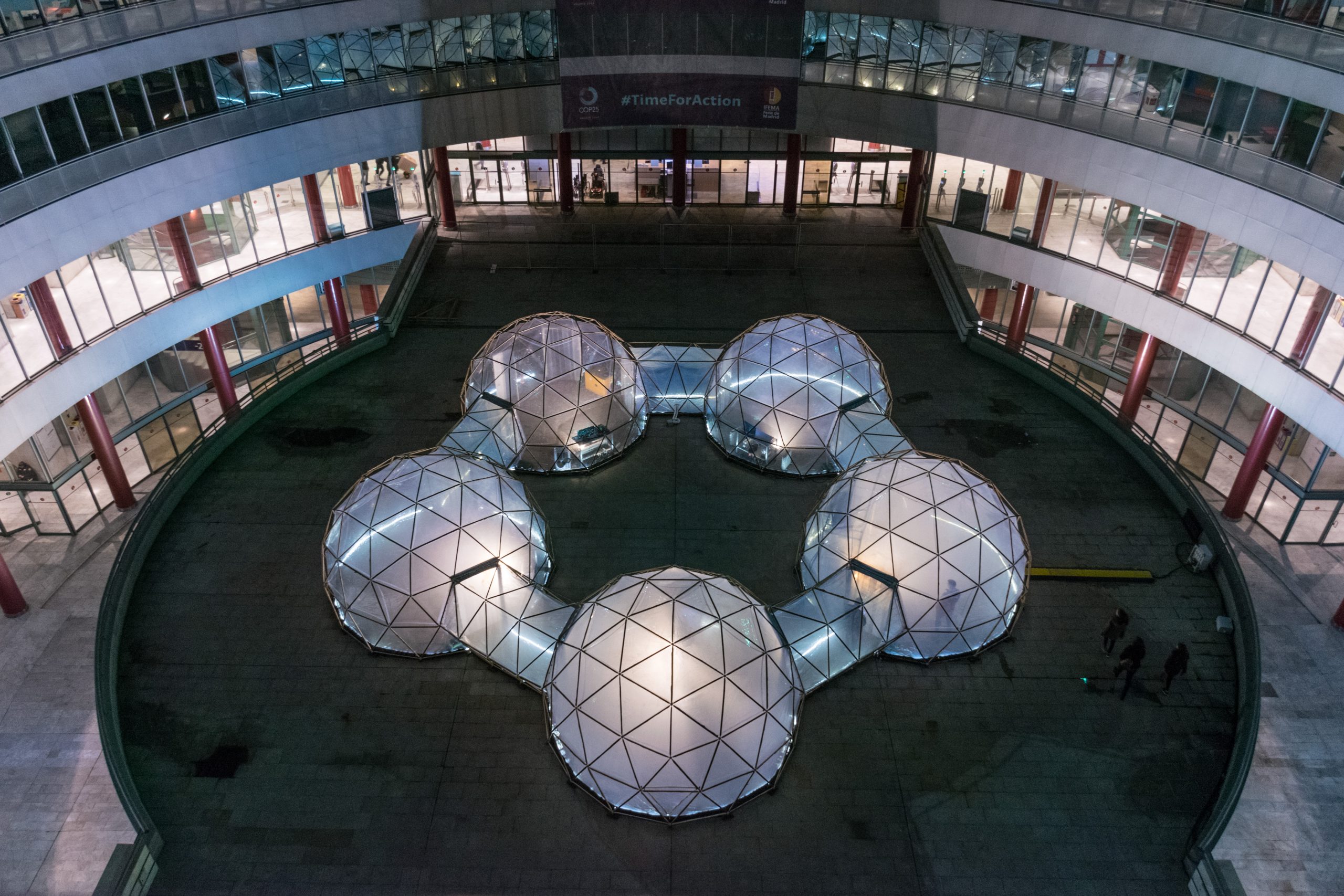
COP25, Madrid, Spain
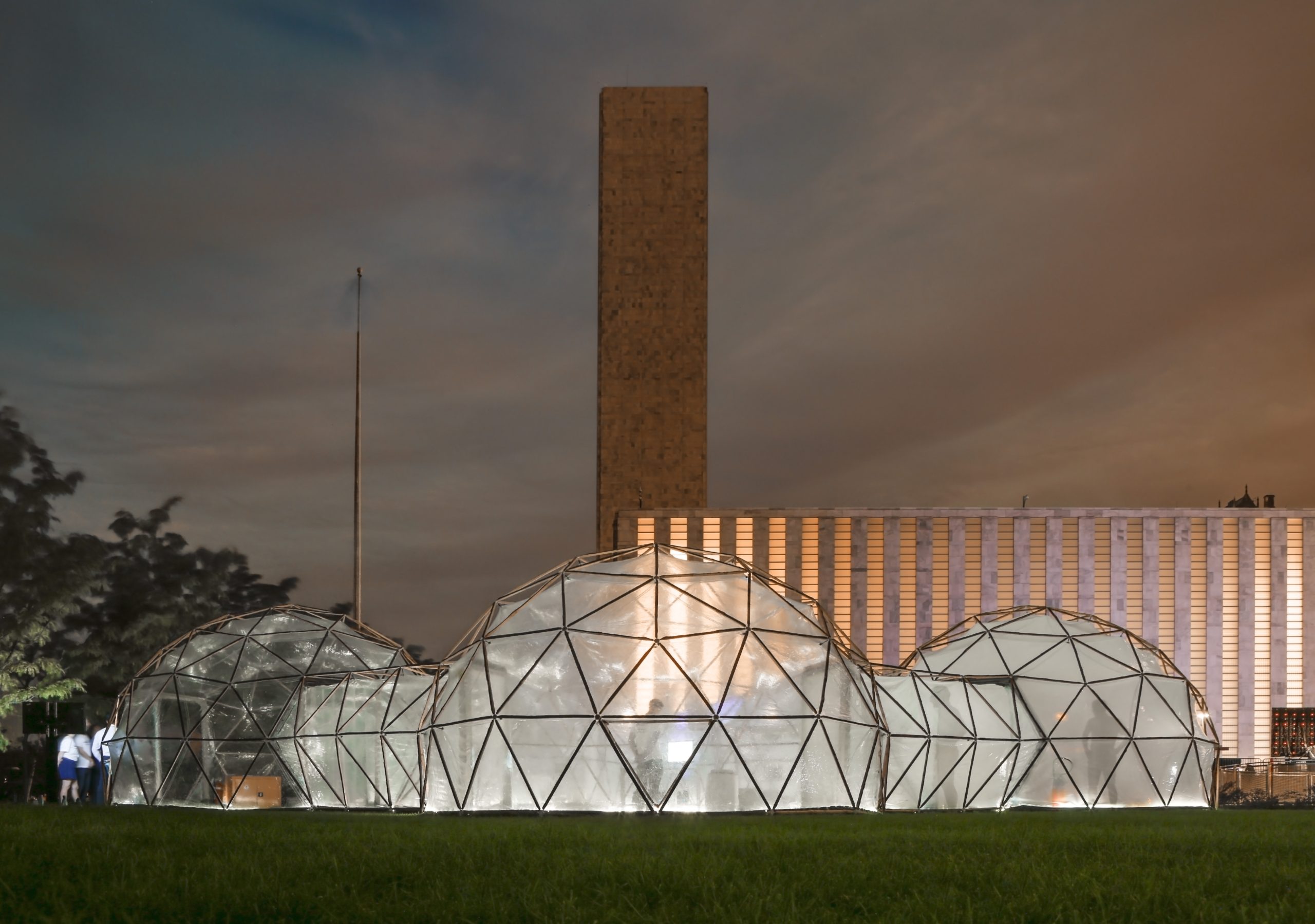
In December 2019, the Pollution Pods were installed at the central building of the Feria de Madrid (IFEMA) to coincide with the UN Climate Change Conference (COP25) in Spain. Brought to the summit by a coalition including Cape Farewell, the World Health Organisation, and the Clean Air Fund, the public display was used to prompt climate negotiators and delegates to connect atmospheric science with public health. The exhibition was officially opened by Spain’s Minister for the Ecological Transition, Teresa Ribera, alongside the Deputy Executive Secretary of the UNFCCC, Ovais Sarmad. Organisers used the presence of the Pollution Pods to back the international BreatheLife Campaign, with officials noting that the physical experience served to remind delegates that international policy negotiations carry direct consequences for global health outcomes.
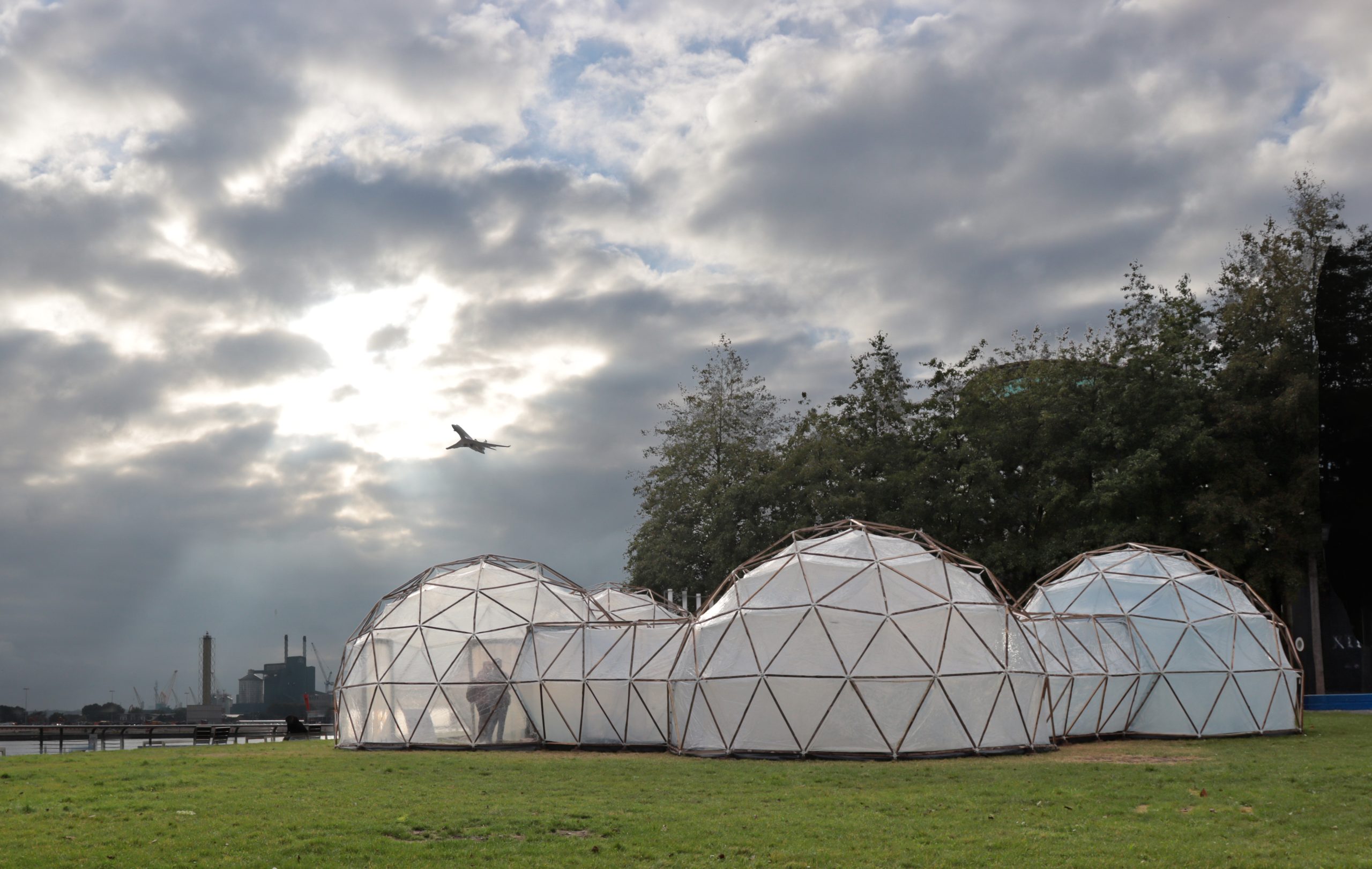
University of East London, London, UK
In October 2021, the Pollution Pods were showcased at the University of East London’s (UEL) Docklands Campus, serving as the launchpad for a UK tour culminating at COP26. As Pinsky is a Reader in Fine Art at UEL, the institution used the home display to run a cross-departmental student internship scheme. Students from architecture, engineering, and visual arts collaborated to construct the geodesic structures on the campus square. Organisers used the exhibition to educate the student body and local community about atmospheric science, while providing the student cohort with the hands-on technical training required to manage and interpret the Pollution Pods at future tour stops.
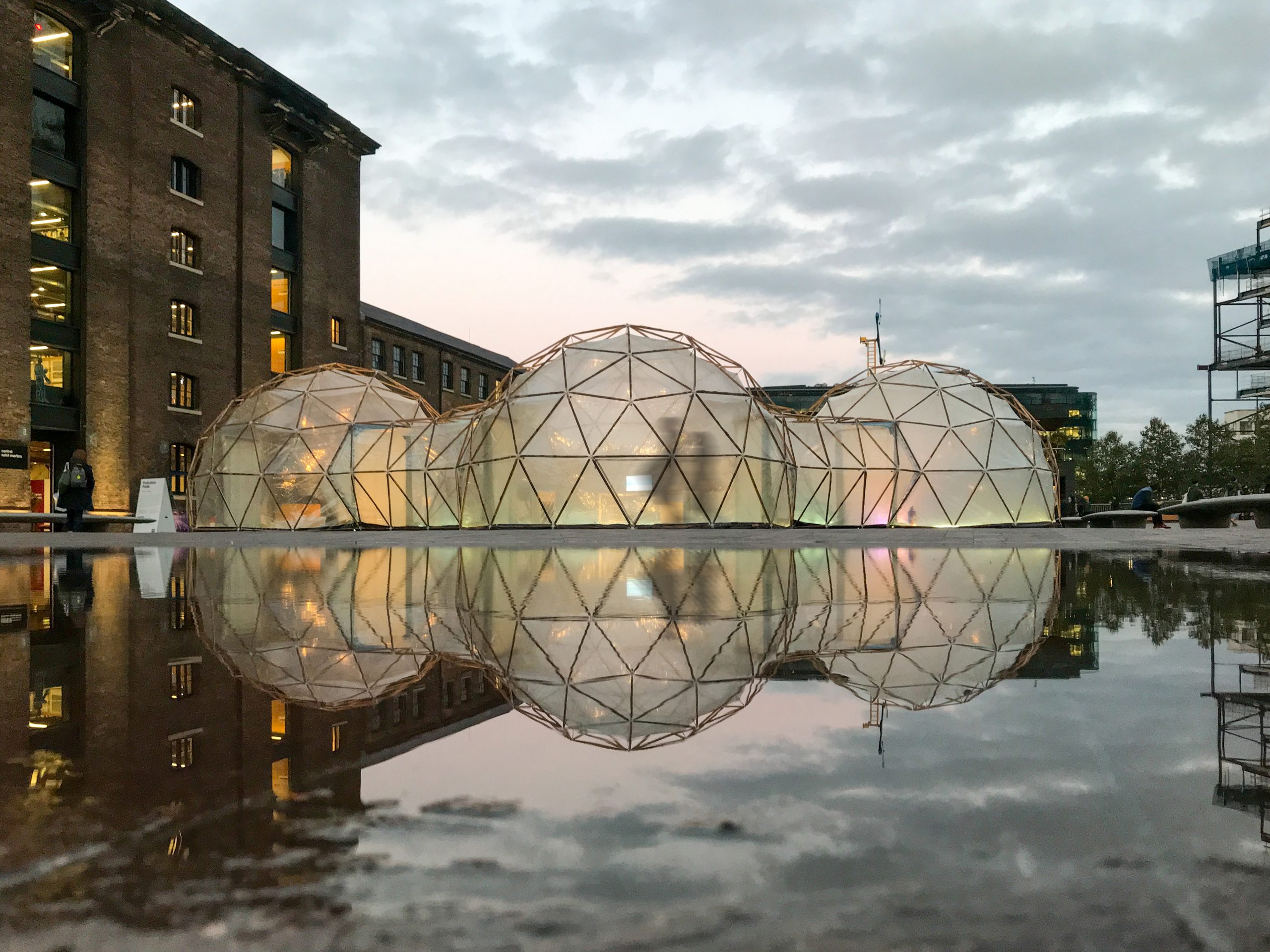
Granary Square, London, UK
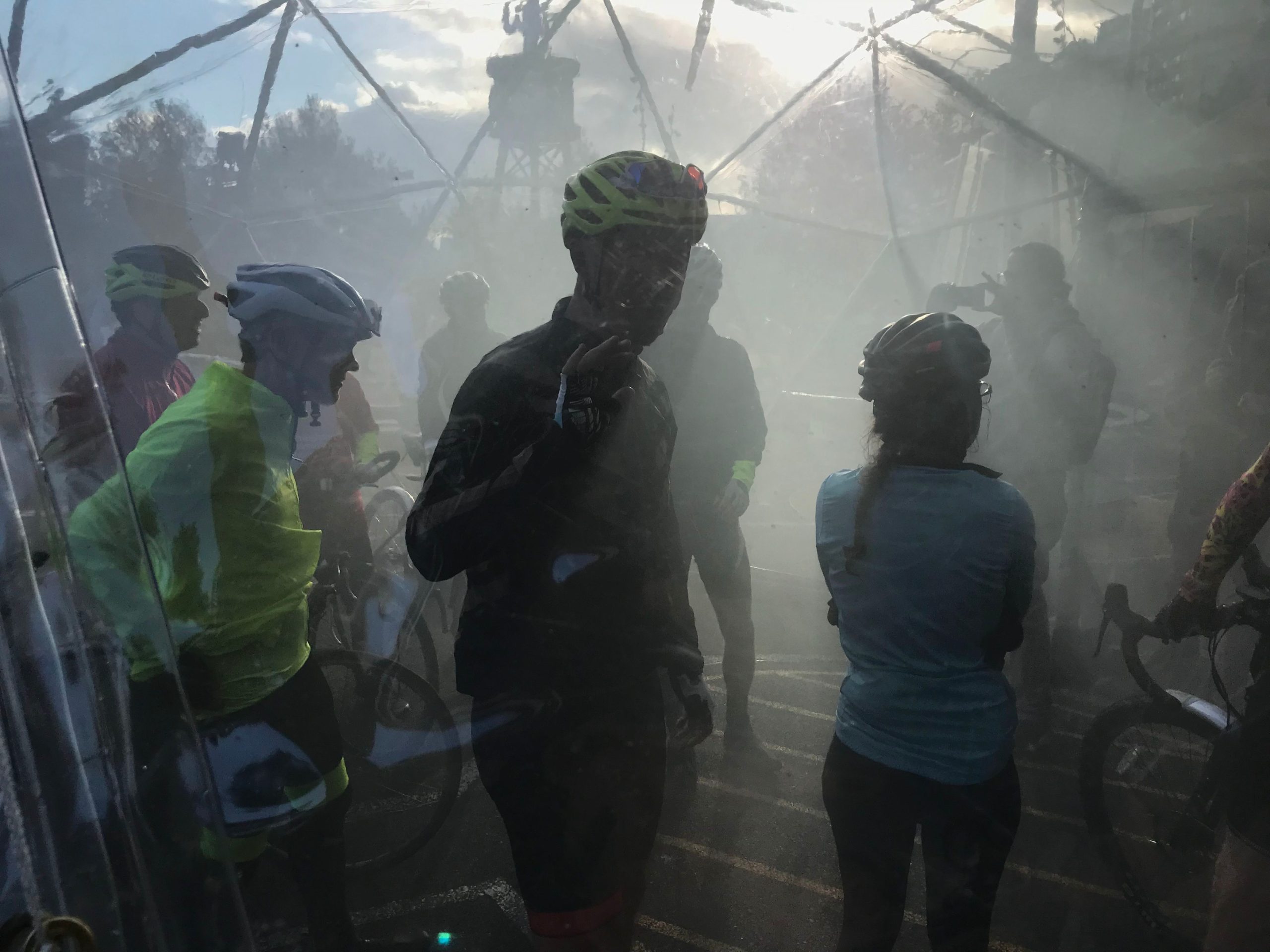
In October 2021, the Pollution Pods were erected in Granary Square, King’s Cross, marking the first full public installation of their high-profile Pollution Drift UK tour. The Pollution Pods spent ten days on the busy London square before being temporarily dismantled to “drift” northwards as individual domes. Organisers, heavily supported by the Clean Air Fund, used the central London location to launch the Ride for their Lives campaign. This initiative saw healthcare staff from six UK children’s hospitals assemble at the square to begin an 800km cycle ride to Glasgow for COP26, carrying a global medical petition for legally binding air quality limits. By drawing massive crowds in a prominent capital space, the exhibition was used to bridge public climate consciousness directly with international healthcare advocacy right before the UN summit..
Think Tank Science Museum, Birmingham, UK
As part of the Pollution Drift UK university tour in October 2021, a single dome touched down outside the Thinktank Birmingham Science Museum at Millennium Point. Positioned outside the museum, the dome served as a public tool to engage local residents and school groups with the overlap between toxic urban air quality and global climate change. The museum team leveraged the installation alongside their existing climate galleries, such as the Our Changing Planet exhibition, to spark discussions regarding the West Midlands’ own historical industrial emissions and ongoing transitions toward sustainable transport
Lancaster Arts Centre, Lancaster, UK
n 27 October 2021, a single dome touched down in Lancaster University, presented by Lancaster Arts. Dubbed The Pod of the Future, the dome served as a focal point for the week-long COP26@Lancaster University festival as the Pollution Drift tour made its way north toward Glasgow. To build upon the presence of the Pollution Pods, Lancaster Arts hosted a cross-disciplinary panel discussion at the nearby Health Innovation Campus entitled How do we breathe?. University leaders, health equity scientists, and environmental researchers used the forum to examine how combining art with science can better illuminate the immediate localised risks that rising urban emissions pose to children and disadvantaged communities.
Royal Victoria Infirmary, Newcastle upon Tyne, UK
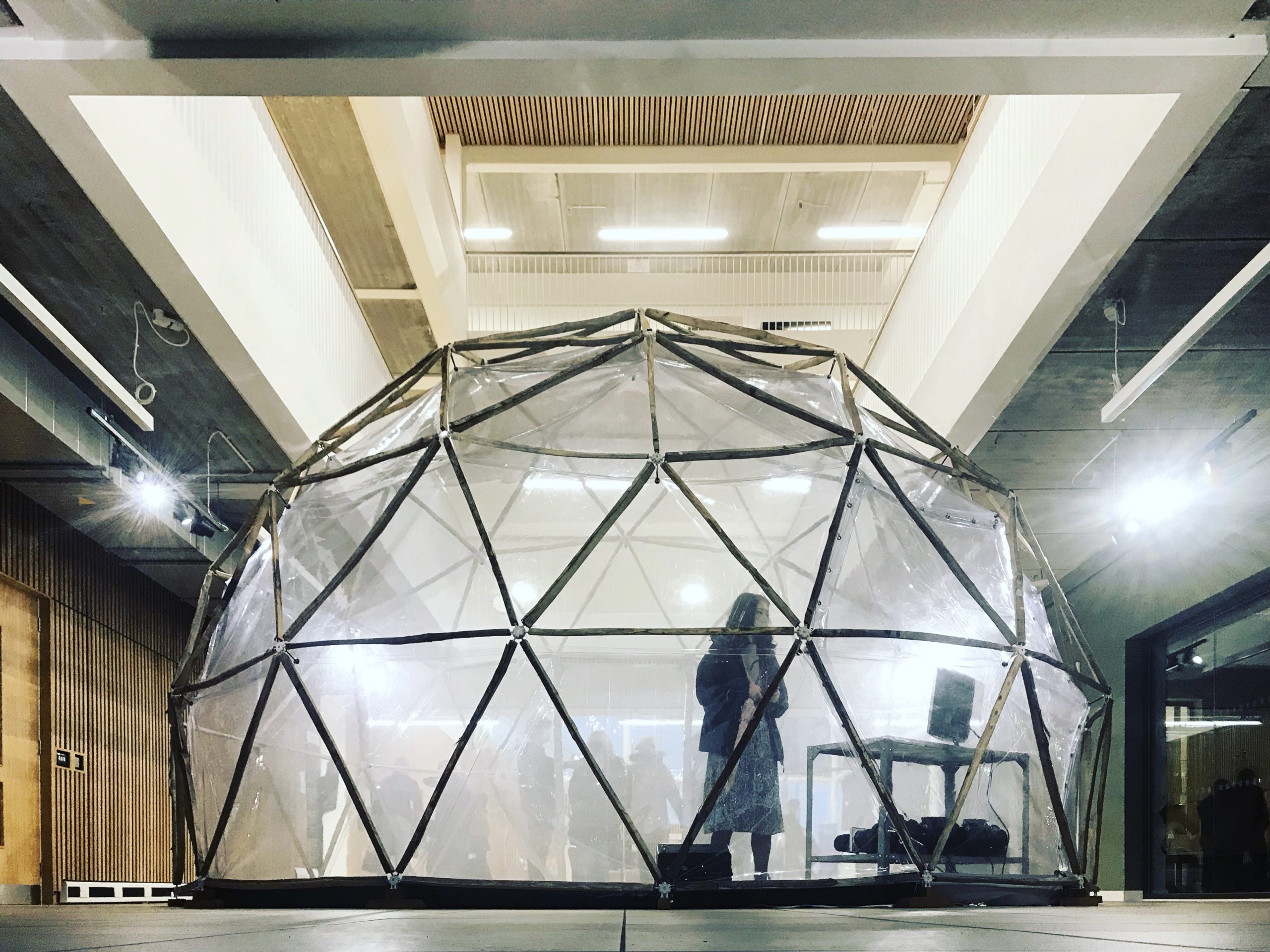
On 28 October 2021, a single dome was displayed outside the Great North Children’s Hospital Serving as a key stop on the Pollution Drift UK tour on the eve of COP26, this standalone dome was used to welcome the Ride for Their Lives campaign. Hospital staff and organisers used the installation to highlight the direct, harmful effects of toxic urban emissions on public health, particularly noting that developing lungs in children are the most vulnerable. By hosting the Pollution Pods directly at a major medical facility, the event was used to connect clinical healthcare advocacy with environmental art, underscoring the legal and humanitarian case for stricter clean air standards before the domes reunited at the UN climate summit
COP26, Glasgow, Scotland
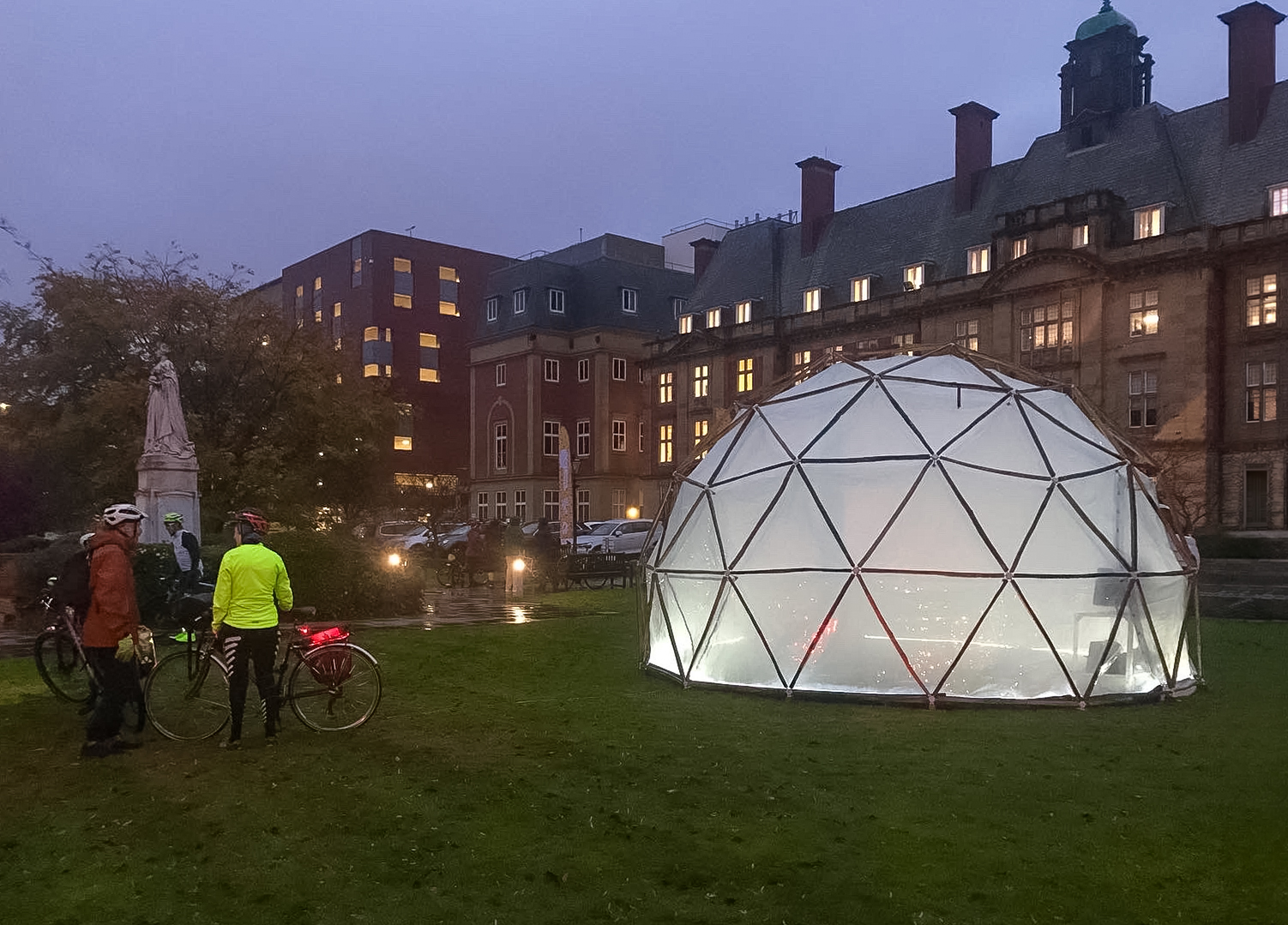
In November 2021, the Pollution Pods reunited as a complete five-dome installation at Gartnavel General Hospital in Glasgow, Scotland, serving as a major focal point for campaigning activities during the UN Climate Change Conference (COP26). Following their individual journeys across the UK, the reassembled domes were used to welcome the Ride for Their Lives cyclists at their final destination. NHS Greater Glasgow and Clyde healthcare teams, alongside international climate coalitions, leveraged the hospital grounds exhibition to directly link public health with atmospheric science. Organisers used the presence of the Pollution Pods to deliver a global medical petition signed by hundreds of healthcare organisations, using the interactive sensory exhibit to press international negotiators and world leaders at the summit to make air pollution a explicit priority in future sustainable development policies.
KunstMuseum Bonn, Germany
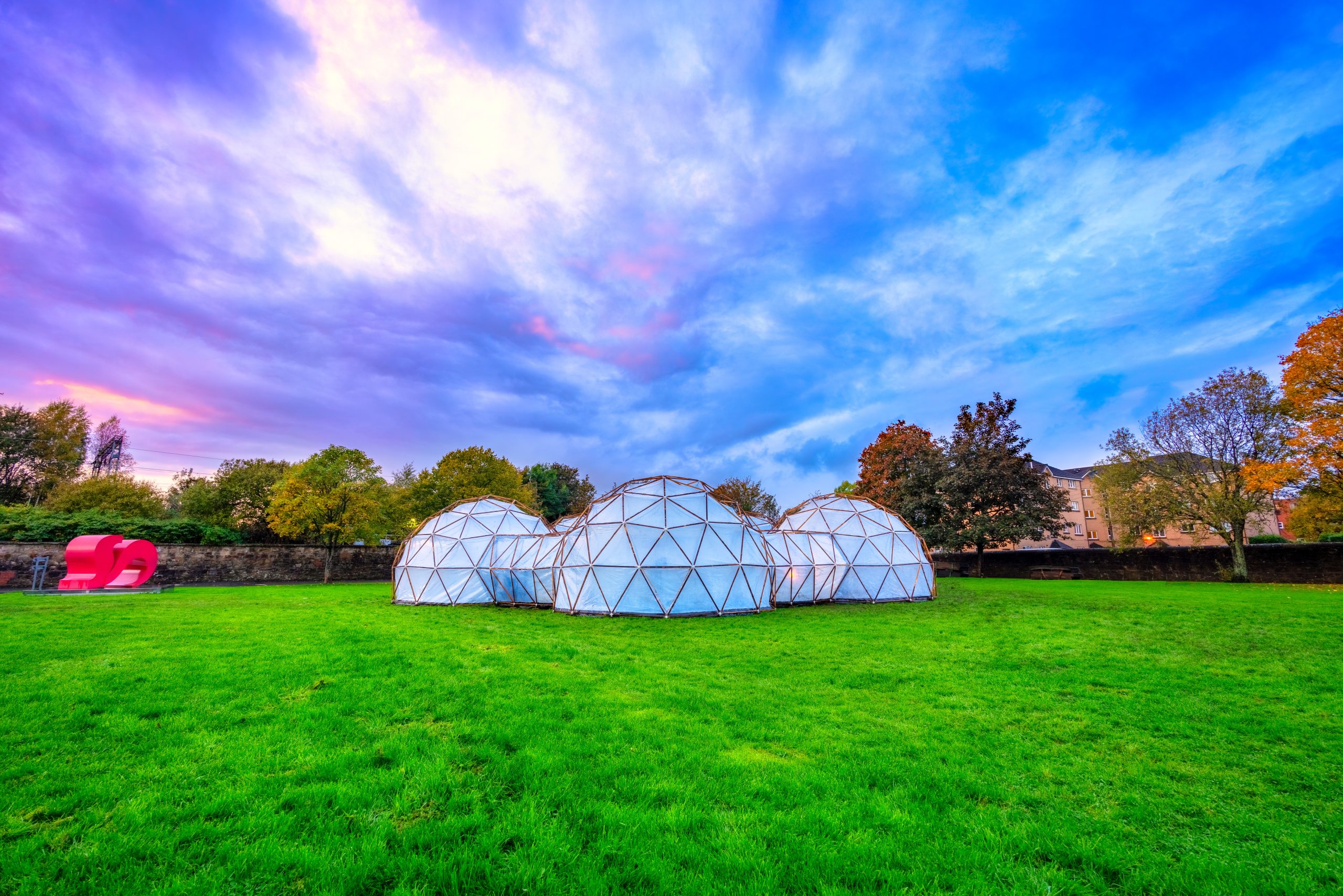
From February to March 2022, the Pollution Pods were erected on the museum forecourt of the Kunstmuseum Bonn in Germany. The public display served as the outdoor centerpiece for the museum’s comprehensive group exhibition, Up in the Air (Welt in der Schwebe), which investigated the political and social significance of air as an artistic medium. Sited on the plaza between the Kunstmuseum and the Bundeskunsthalle, the installation ran alongside indoor works by major historical and contemporary artists who also utilised air, including Andy Warhol, Yoko Ono, Piero Manzoni, Otto Piene, and the duo Ulay and Marina Abramović. Organisers paired the exhibition with a regional political forum where North Rhine-Westphalia parliamentary candidates debated sustainable transformation. By placing the Pollution Pods alongside these iconic conceptual works, the museum grounded abstract aesthetic and policy debates in a physical reality, encouraging visitors and politicians to confront how consumerism directly drives global atmospheric degradation.

Draiflesson Collection, Germany
In October 2022, Michael Pinsky’s Pollution Pods were hosted outside the Draiflessen Collection in Mettingen. Founded by the Brenninkmeijer family, the owners of the retail giant C&A, on a former industrial site, this private art museum focuses on scholarly explorations of sustainability, globalisation, and consumer culture. The outdoor exhibition ran alongside The Final Bid, an installation commissioned by the museum exploring global carbon footprints. Organisers used the presence of the Pollution Pods to create a multi-layered environmental showcase, using the contrasting global microclimates to encourage visitors to connect their individual consumer choices directly with atmospheric degradation.
Midland Arts Centre, Birmingham, UK
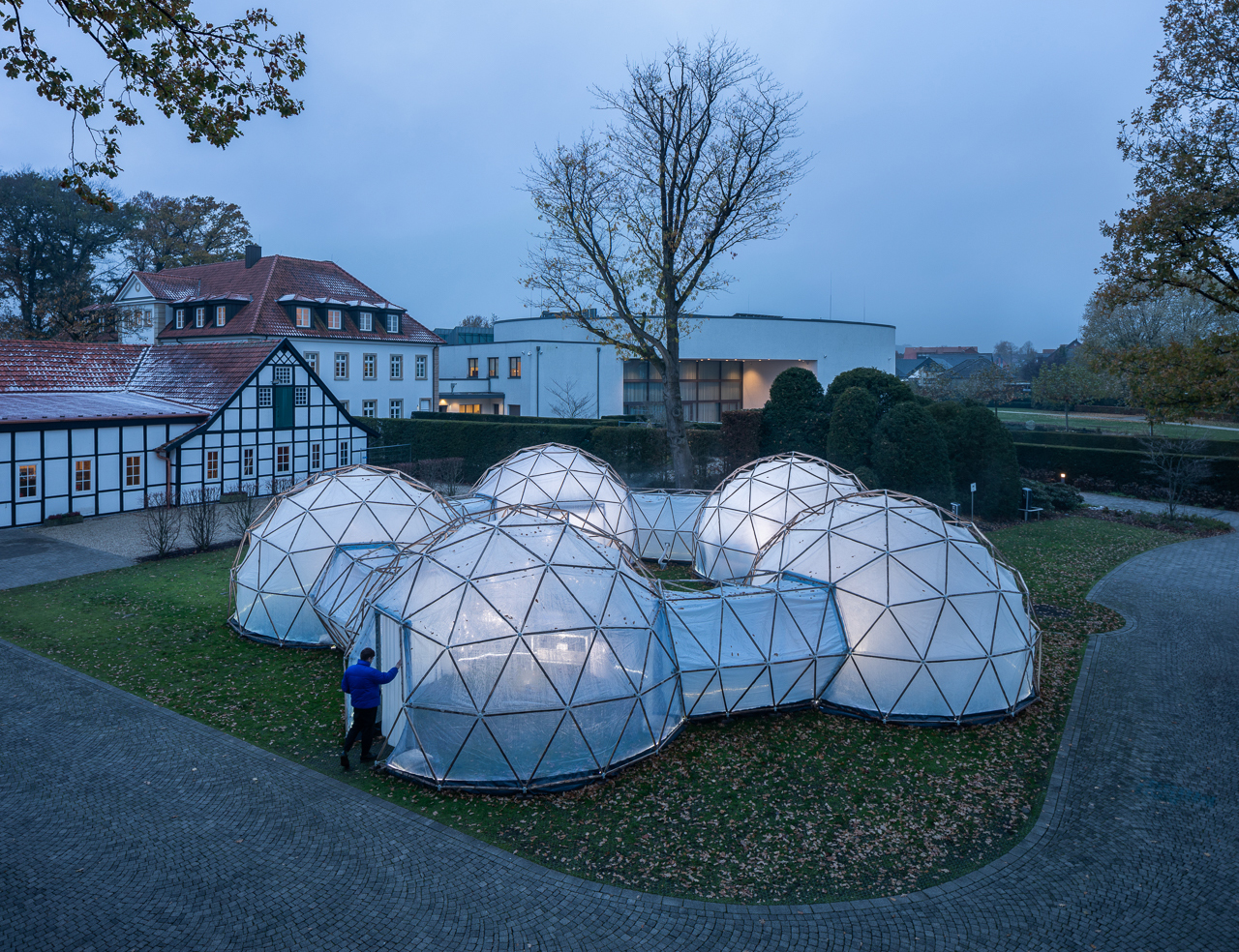
In September 2023, the Pollution Pods were presented by the Midlands Arts Centre (MAC) in partnership with Edgbaston Events. Sited just opposite the main arts centre building on the Edgbaston Stadium Piazza, the exhibition was used as the flagship anchor for MAC’s Big Green Weekender. Organisers used the presence of the contrasting global microclimates to engage the local community directly with the West Midlands’ ongoing air quality and sustainable transport initiatives. The educational display attracted 3,500 people, with youth engagement heavily prioritised by ensuring that forty per cent of the attendees were under sixteen years of age
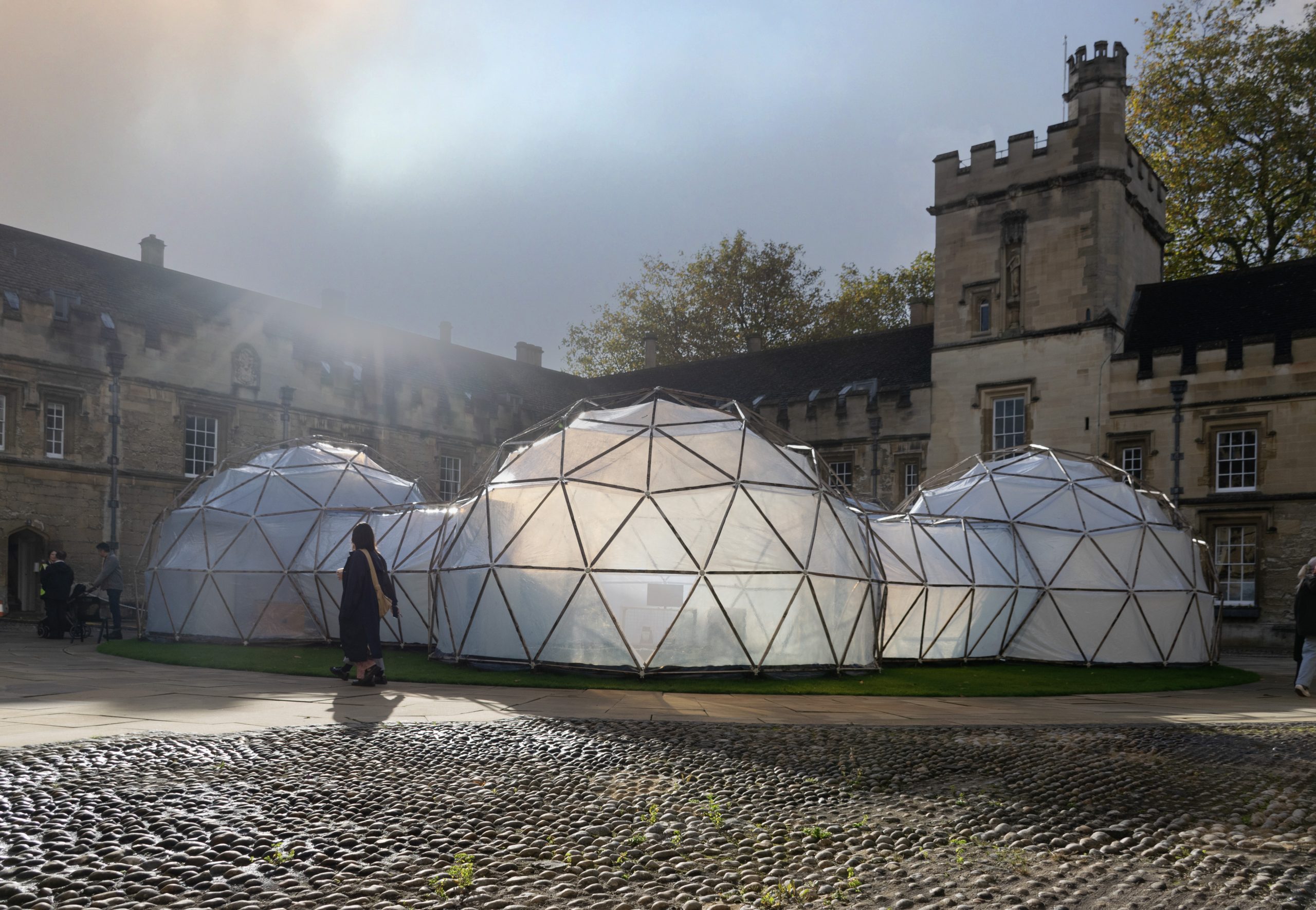
St John’s College, Oxford, UK
From October to November 2023, the Pollution Pods were installed at St John’s College, Oxford, contrasting the historic college architecture with the contemporary geodesic domes. Arranged in the Front Quad, the exhibition served as a core component of Everything is Connected, a series of creative city-wide pop-up events produced by the University of Oxford’s Cultural Programme, the Environmental Sustainability team, and the college. Organisers used the physical installation to ground local climate discussions, pairing the display with a public panel talk titled The Air We Breathe, which featured environmental scientists and local activists.
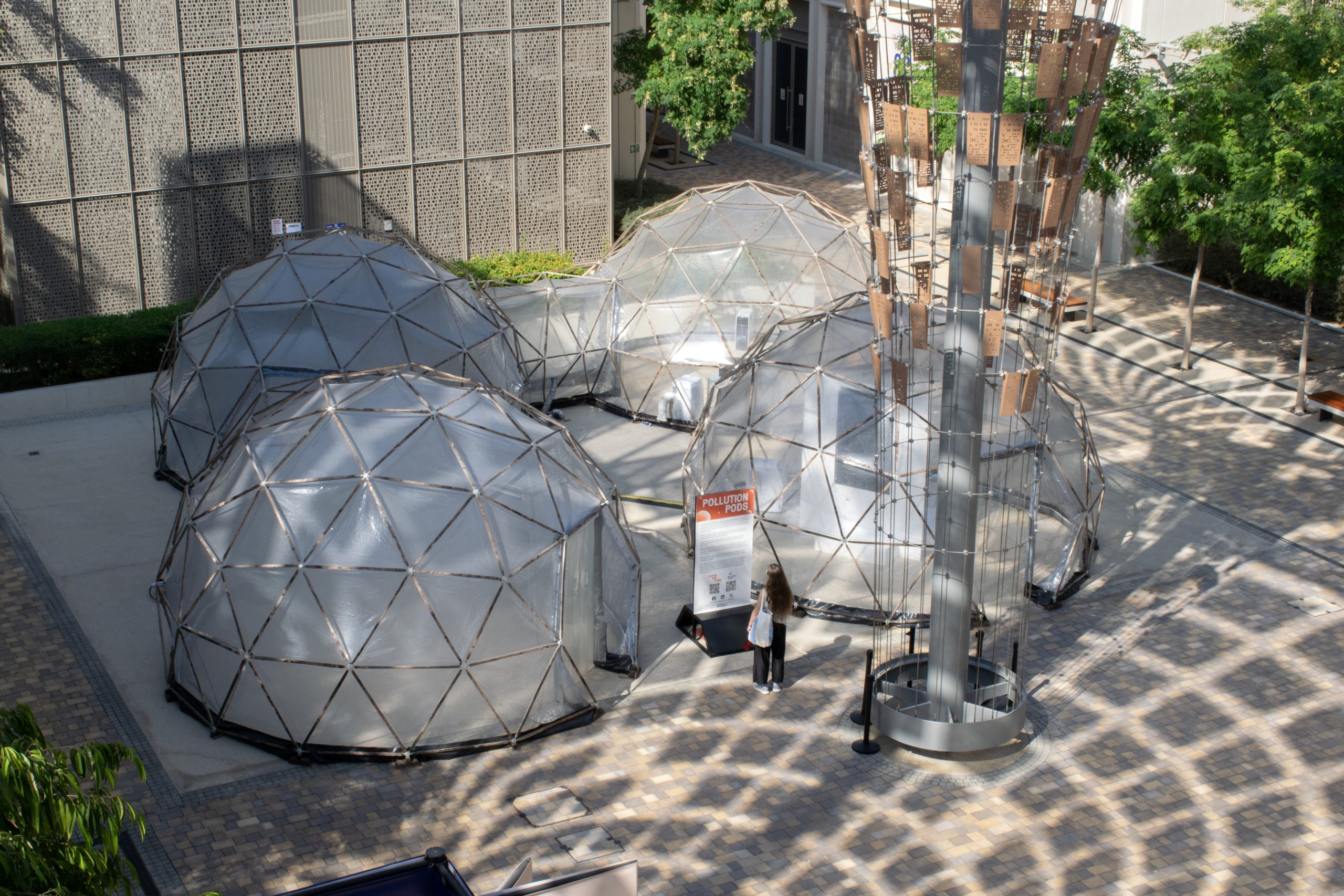
COP28, Dubia, United Emirates
In November and December 2023, the Pollution Pods were installed within the high-security Blue Zone at Expo City in Dubai, United Arab Emirates, during the UN Climate Change Conference (COP28). Supported by the Clean Air Fund and the Breathe Cities initiative, this specific iteration featured geodesic domes simulating the contrasting air quality of London, Beijing, and New Delhi, alongside a final dome presenting clean-air solutions. Organisers used the presence of the installation to draw a direct line between public health, fossil fuel combustion, and the climate crisis, specifically highlighting how “super pollutants” like black carbon shorten lifespans. By placing the interactive, sensory display directly on the path of international negotiators and policy-makers, the exhibit was used to lobby for strict global air quality monitoring and to accelerate financial commitments toward urban clean-air initiatives.
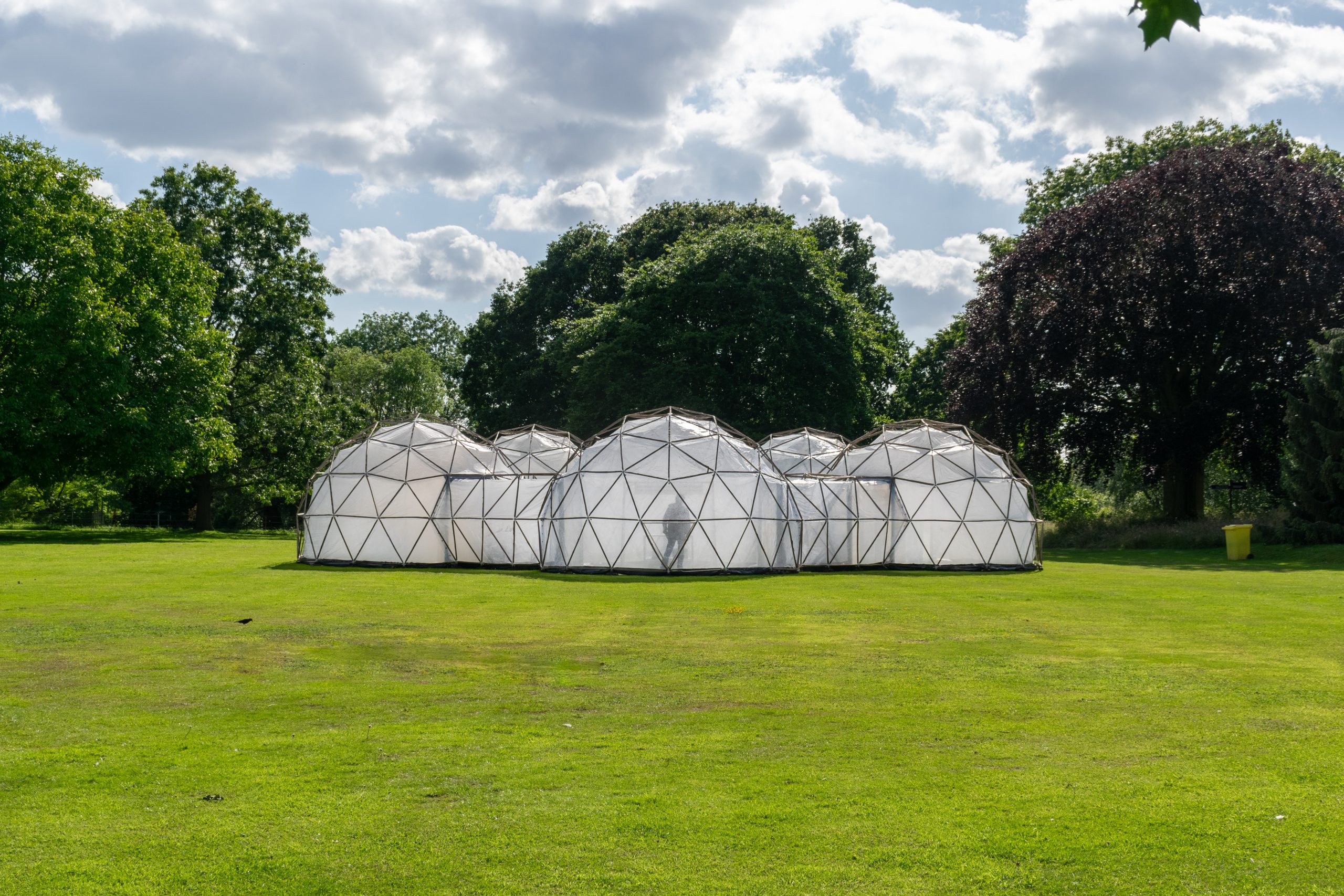
Harper Adams University , UK
In June 2024, the Pollution Pods were constructed in front of the main building at Harper Adams University, serving as the central attraction for the university’s inaugural Future Fest community festival. Sited within a rural campus known for agricultural and environmental research, the installation’s presence was used to emphasise that atmospheric issues are as vital in green, countryside locations as they are in industrial urban environments. In the two weeks leading up to the public festival, university organisers used the interactive display to run a packed educational outreach programme, hosting more than 350 schoolchildren. By embedding the global microclimates alongside a sustainable food and farming event, the university used the Pollution Pods to provide local residents and young people with a tangible, sensory connection to international climate and emissions debates.
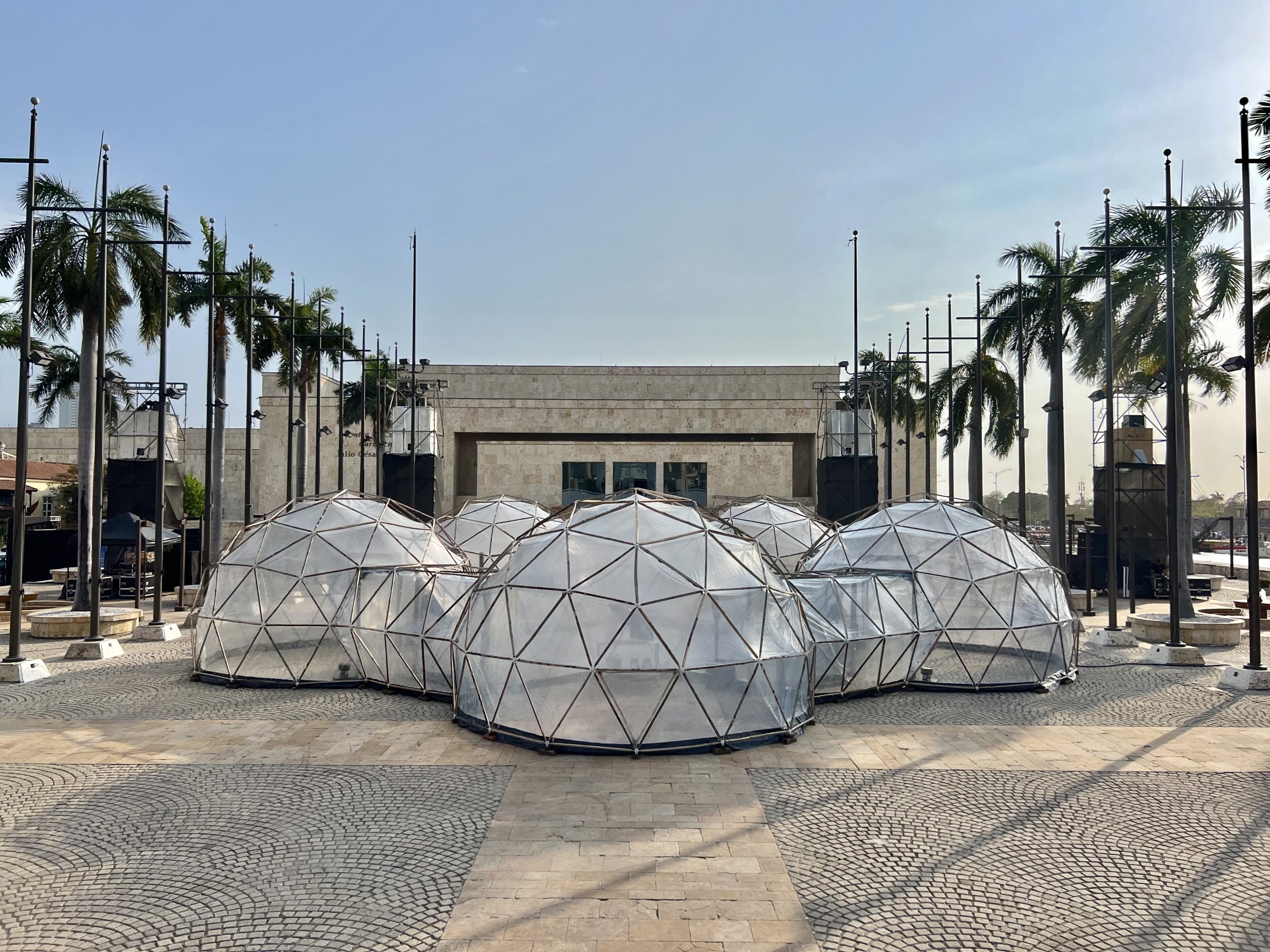
WHO conference on Air Pollution Caragena, Columbia
In March 2025, the Pollution Pods were installed at the Conference Centre esplanade in Cartagena, Colombia, serving as a major interactive feature for the World Health Organisation’s Second Global Conference on Air Pollution and Health. Supported by the Climate and Clean Air Coalition (CCAC), this specific iteration of the geodesic domes focused on simulating the distinct atmospheric impacts of different pollution sources—including transport, industry, agriculture, energy, and domestic activity. Organisers used the public, multisensory display to engage more than 700 international experts, health ministers, and environmental advocates from 100 countries. By letting delegates physically step into contrasting global airscapes, the exhibition was used to ground technical policy panels in a visceral reality, driving a collective push to accelerate global public health solutions and halve deaths from air pollution.
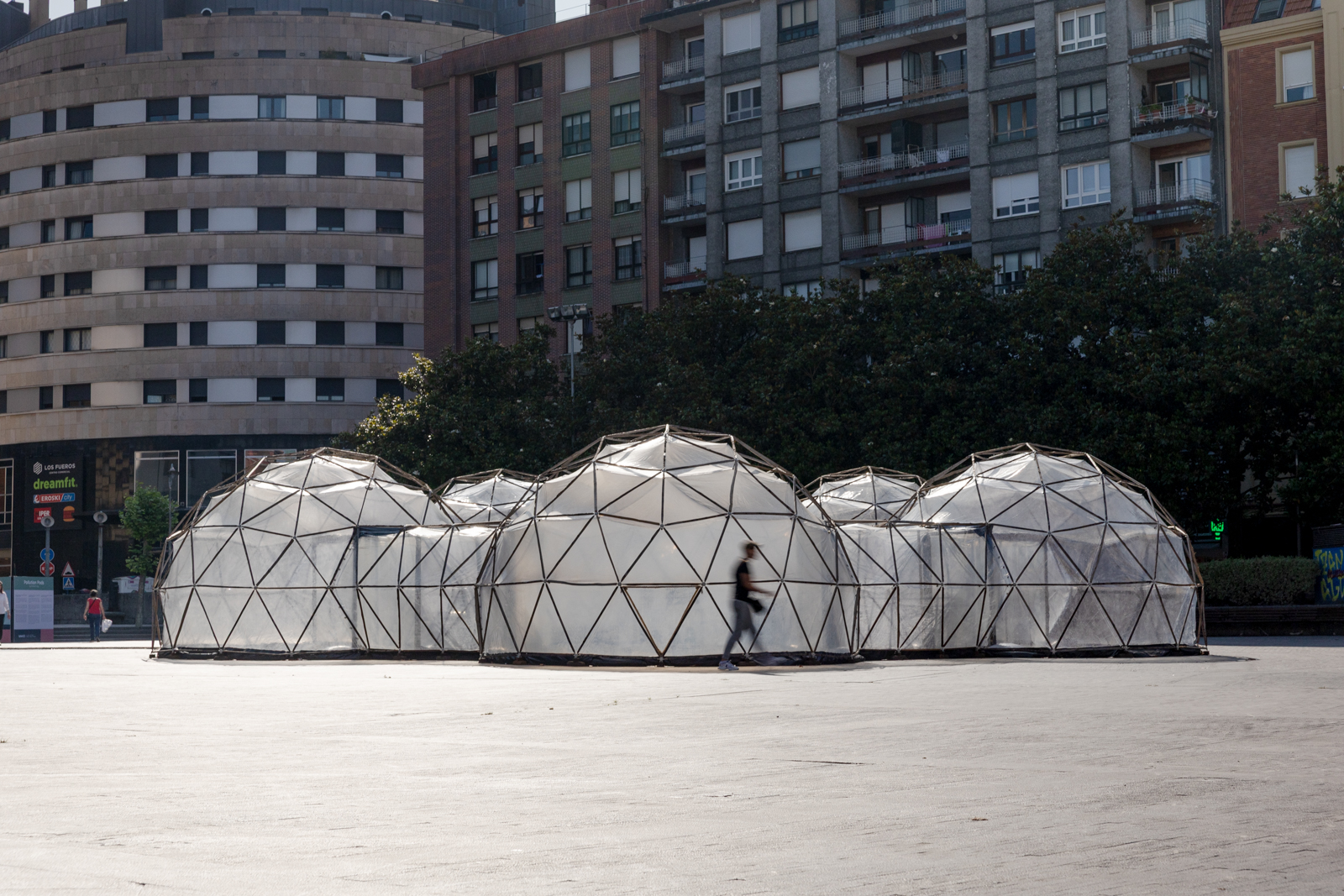
Herriko Plaza, Blibao, Spain
In June 2025, the Pollution Pods were installed at Herriko Plaza in Barakaldo, a major industrial municipality located within the Bilbao metropolitan area in northern Spain. Brought to the Basque Country by the BBK Foundation to mark its tenth anniversary, the free public exhibition was positioned in the city’s central square to transform local conversations about environmental health. Organisers used the presence of the contrasting global microclimates to connect the region’s historic industrial background with contemporary atmospheric challenges.
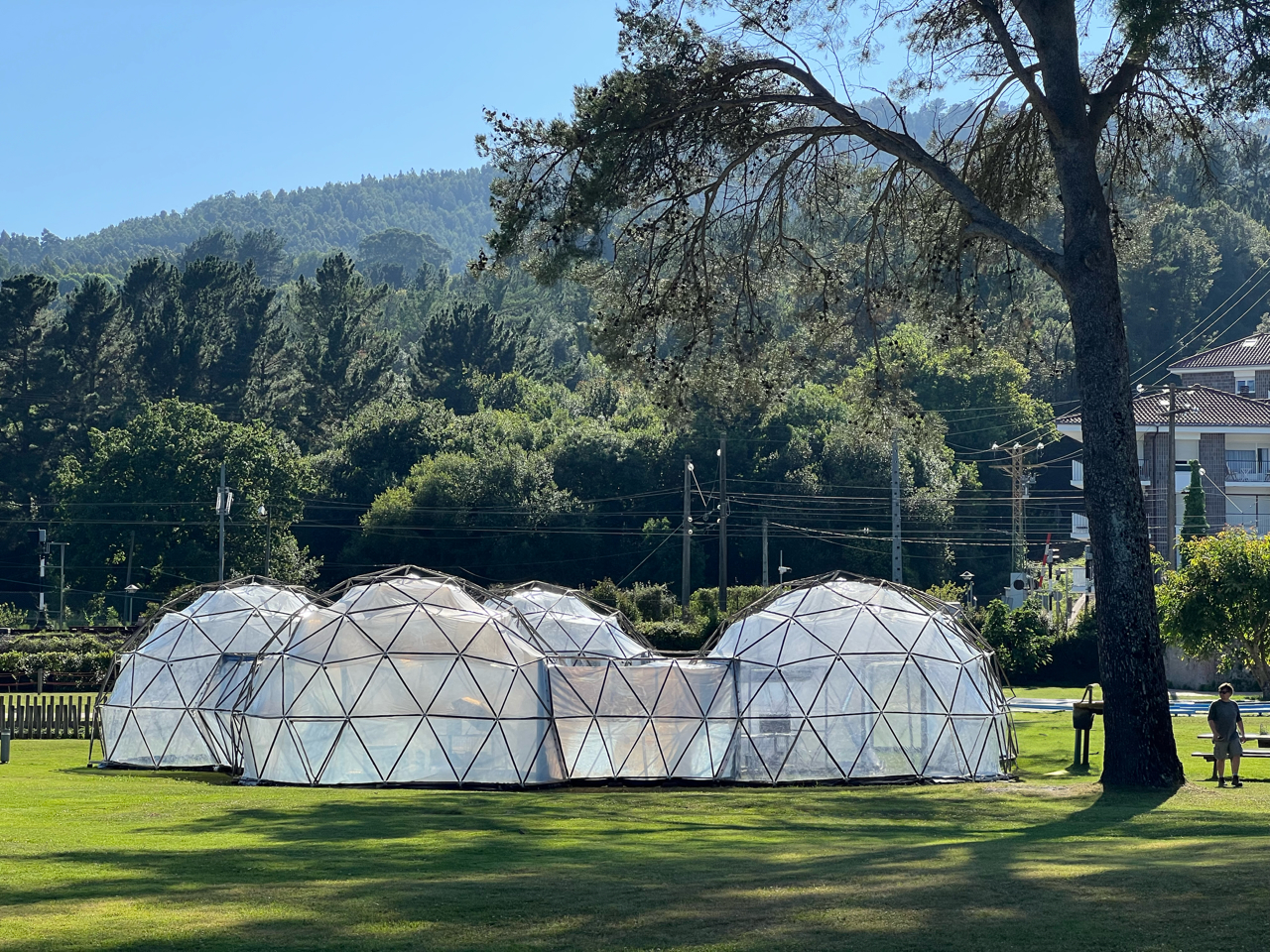
BBK Klima Abentura, Bizkala, Spain
The Pollution Pods were shown at the BBK Klima Abentura experiential park in Busturia, Bizkaia from July to August 2025. Located within the protected Urdaibai Biosphere Reserve, this 80,000-square-metre environmental education centre integrated the installation into its broader interactive programming on climate change. By embedding the Pollution Pods alongside the venue’s immersive eco-challenges, the foundation used the exhibition to practically demonstrate how unconscious, everyday consumer decisions in the West contribute directly to environmental degradation and toxic emissions across the globe
Festival Internacional Cervantino, Guanajuato, Mexico
In October 2025, the Pollution Pods made their Mexican debut at Los Pastitos during the 53rd Festival Internacional Cervantino in Guanajuato, generating significant media attention as part of the British Council’s Guest Country of Honour showcase. Latin American press outlets heavily covered the outdoor exhibition, with El Economista describing it as the festival’s “most uncomfortable and necessary piece” for forcing the public to confront environmental degradation through their own breathing. Major news features, including an extensive review by El País, highlighted how the exhibition shifted climate change from a distant, abstract threat into an immediate sensory shock. Organisers used this widespread media profile to broadcast broader discussions on global environmental justice, leveraging the international press coverage to highlight how Western consumer habits directly export heavy industrial toxicity to developing manufacturing nations.